United’s Distance Learning Success Story

Do you feel called to faith or justice leadership, but want to stay rooted in your community? You need a seminary that fits your needs.

At United Theological Seminary of the Twin Cities, our state-of-the-art technology allows students from around the world to study online while:
  • Becoming an involved member of the United community and classroom
  • Gaining a world-class progressive education
  • Accessing support from peers, staff, and faculty
  • Training to become an impactful leader

Why United Has an Edge

Innovation is part of United’s DNA.

Forged during the volatile social climate of the 1960s, United was never envisioned as a monolithic organization. From its inception, the seminary has demonstrated an intentionality of advancing public theology to stay current with the times, moving toward a more diverse faculty and student body—by faith traditions, gender, orientation and expression, ethnic background, life phase, and geographic location.

By extending United’s reach into a national and global sphere, we are leaning into our values of interreligious and intercultural engagement. At the same time, we are uniquely poised to equip our students to lead and minister toward justice and peace in a multi-faith world.

We offer flexibility.

In the fall of 2022, the average age of a United student was 43. Many of our students have life circumstances that make compulsory in-person attendance difficult, as they are rooted in their communities—homes where they want to stay and make an impact.

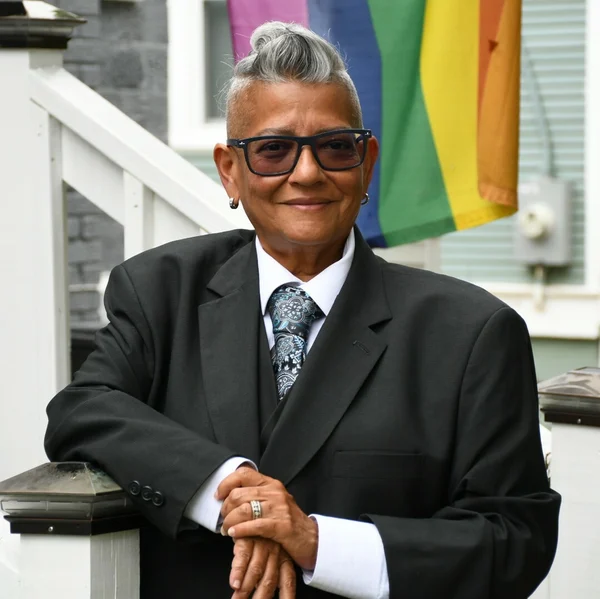
Lisbeth Melendez Rivera—a 35+ year veteran of social justice work, and recent candidate for city council in Hyattville, Maryland—worked on a Master’s degree while living on the East Coast. “I’ve conducted my entire learning experience on Zoom,” she shares, “and it has been a fantastic experience.”

Being able to learn from a distance was essential for Rivera. “I was able to work and get assistance from my union to complete my studies,” she explains. If she were required to move, Rivera adds, “that would not have been possible.”

Our leadership promotes transformation through distance learning.

Our technological investment was a calculated plan, and not a sudden pandemic-inspired shift. United, when it moved in 2019 to its Saint Paul home in the CASE building, deliberately advanced its technological capabilities in the new space.

The city-centered campus, with its modern and tech-friendly design, is near light rail and bus routes. As such, it is far more accessible for both commuters and distance learners.

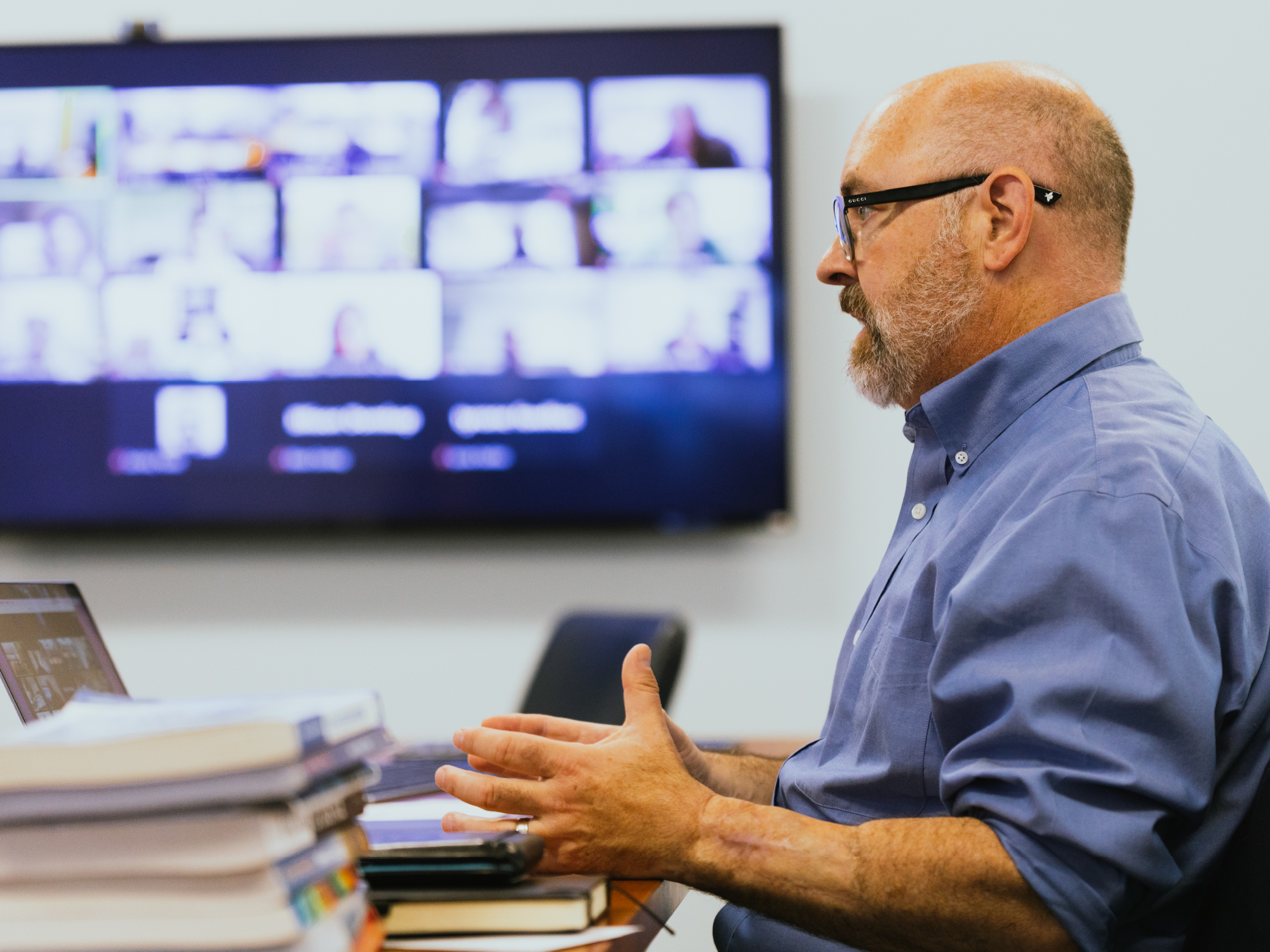
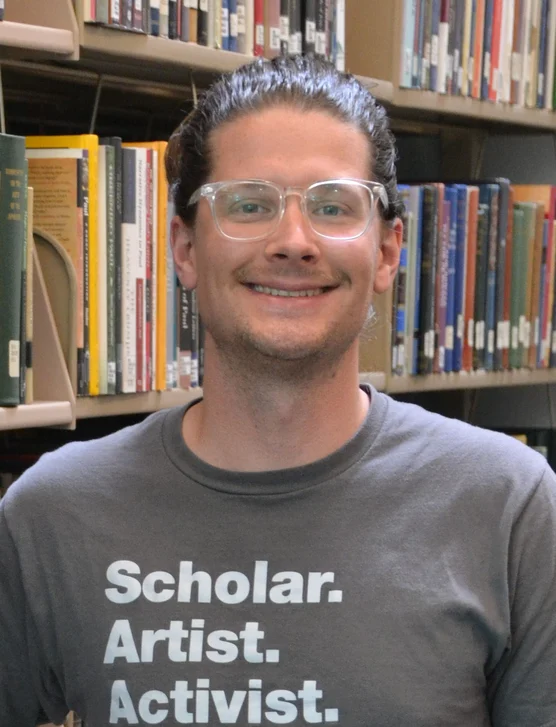
Pictured at left, Rev. Mason Mennenga—a United alum, employee, and podcast host of A People’s Theology—admits that the seminary has a “Zoom culture.” “It’s a great thing,” he adds.

“Our distance students feel like there is a distinct community built among them. This is especially rare for seminaries and there is a reason why we often have students transfer from other distance programs to ours, because we offer a leading distance program. In fact, we have been doing Zoom courses for almost five years, well before the pandemic, so we have been able to develop a community of students over Zoom far longer than other seminaries.”

The Nuts and Bolts

Synchronous classes allow for discussions in real time. Each one of our classrooms has high-quality microphones, high-definition cameras, and flatscreen TVs so that the online/in-person interaction in the classrooms is as seamless as possible.

As one recent distance learning graduate asserts, “distance learning worked for me because I always felt like I was a part of the United community.”

Asynchronous pedagogy—a modality that allows students to access content and move at their own pace—is the most flexible option for our faculty and students. It also allows students and faculty to be a little more creative.

For asynchronous classes, as Associate Professor of Theology and the Arts Dr. Jennifer Awes Freeman explains, she creates a personal introduction (sometimes on video) and invites her students to create and post their own introductions. These self-directed introductions allow students to discover commonalities as well as unique points of interest and start to form a community.

Awes Freeman adds, “In my course design and interactions with students, I strive to create an accessible, transparent, and collaborative learning environment. Regular and open communication, coupled with responsive pedagogy (such as incorporating additional resources in response to student questions), helps to foster learning online.”

Rivera (pictured at right) notes that she has been able to meaningfully connect with United’s faculty and fellow students online. She also “highly values” the opportunities she had to serve on the Student Leadership Council, take part in the Committee Advocating for Racial Justice (CARJ), and meet one-on-one with faculty.

Rivera even organized an online “pancake breakfast” with her fellow students. “I asked, as part of my project, for my classmates to help me organize a common space where each student brought their favorite pancakes, or something that met their dietary requirements, with extra servings to share.” Students find ways to make community, both when they are online and on campus.

Synchronous classes allow for discussions in real time. Each one of our classrooms has high-quality microphones, high-definition cameras, and flatscreen TVs so that the online/in person interaction in the classrooms is as seamless as possible.

United also has a selection of library resources available online, including eBooks and journal articles. Dr. Tim Sena, director of the Spencer Library, notes that he is “working on increasing the number of these resources all the time.” The pandemic also created an impetus to make the online library even more accessible.

Translating Online Learning to Ministry

United is educating leaders to serve in many impactful ways—congregational ministry, chaplaincy, nonprofits, arts organizations, public policy roles, academia, social services, and more. Our unique curriculum, which incorporates social transformation, the arts, and interreligious dialogue, helps to better inform and ground advocates for justice, equity, inclusion, and love for all.

As one alum has stated, “United understands that students are not solely called to preach and teach within the walls of an institution, but to take our witness into the public square.”

On a more practical level, all students—whether distant or on campus—have chances to take leadership roles in student affinity groups, the student leadership council, United chapel services, and other events that United hosts live and via livestream. With help from our chaplain, students also have access to personal counseling and CPE (Clinical Pastoral Education), an interfaith hands-on learning practicum.

What’s more, all that technology is increasingly part and parcel of ministries, nonprofits, and many other businesses today. Notes one 2022 graduate, “Technology is a huge part of ministry, and United prepared me to hit the ground running in my new church home.”

Those who founded United Theological Seminary were uniquely prescient in their vision for aligning the new seminary with the newly formed United Church of Christ. Steeped in the turmoil of the 1960s, the founders recognized the importance of an ecumenical seminary, foresaw “professional preparation of men and women (emphasis added),” and dedicated themselves to providing “the most adequate program of theological education possible.”¹

Sixty years later, as our nation calls for racial justice and slowly recovers from the unprecedented pain of a worldwide multi-year pandemic, United’s students, alums, and faculty have been creative, ethical, and compassionate leaders. Girded with our foundational values and modern technology, we have learned to lead worship in new ways, coordinate public forums, work to transform society, minister to hurt communities, and keep providing quality theological education in person and through distance learning.


1.  Merrill, Arthur L. United Theological Seminary of the Twin Cities: An Ecumenical Venture (New York: The Edwin Mellen Press, 1993), 287–288.]

Explore More Articles

Rev. Dr. Molly T. Marshall to Retire in 2027 Following Six Exemplary Years as President

Her Vision and Leadership Have Transformed United Following six historic and transformative years as President of United Theological Seminary of the Twin Cities, Rev. Dr. Molly T. Marshall will retire on June 30, 2027, upon completion of the seminary’s 65th academic year. President Marshall secured United’s financial standing, advanced institutional objectives toward long-term sustainability, and catalyzed historic growth in institutional fundraising and student enrollment. Rev. Dr. Marshall assumed her role as Interim President in March 2021 following thorough vetting by a search committee and the Board of Trustees’ unanimous vote. Having served in theological education for more than 40 years, her reputation preceded her. She made headlines as the first woman appointed to the School of Theology at Southern Baptist Theological Seminary, the flagship school of the Southern Baptist Convention. Ordained as a Southern Baptist, she later received the privilege of call by the American Baptist Church.  In 1997, she joined the faculty of Central Baptist Theological Seminary as professor of Theology and Spiritual Formation, thereafter stabilizing and revitalizing the school as President from 2004 to 2020, becoming the first woman ever to lead a Baptist seminary or divinity school. President Marshall’s respect and renown culminated in her executive report on effective seminary leadership, written for The Association of Theological Schools (ATS) before she arrived at United. Her experiences as a congregational minister, feminist theologian, prodigious academician, and her achievements as an administrator in theological education augured well for the seminary’s future in her care. Less than a year later, her position was made permanent, formally making her United’s tenth president, and, desiring to honor United's legacy, she pursued and received clergy standing with the MN United Church of Christ. United trustees outlined a set of priorities at the beginning of President Marshall’s tenure, on which she began immediate work. She invested much of her first several months in office in forming connections with alums, donors, and faculty. She concentrated her relational acumen on Advancement, and donors responded enthusiastically. In September 2021, United announced the Johnson-Fry Chair in World Religions and Intercultural Studies, endowed by Rev. Dr. Andrea Johnson (’17, ’23) and David Fry. Cultivating “respect for the lived religion of others,” as President Marshall often asserts, is a pillar of her scholarship and the seminary’s academic ethos. The Sophia Chair in Religious and Theological Studies, funded by a generous gift from Dr. Mary Farrell Bednarowski—Professor Emerita of Religious Studies (1976–2004)—and her husband and former trustee, Keith Bednarowski, followed in 2024. Finally, in 2025, a cadre of friends, alums, and former faculty established the Wilson Yates Chair in Theology and the Arts. These chairs, paired with substantial growth in endowed scholarships, feature prominently in President Marshall’s legacy and will endure as a witness to her faithful stewardship of alum and donor relations. Rev. Dr. Cindi Beth Johnson, Vice President for Advancement, reflects, “President Marshall’s enthusiasm, attention, and engagement with our donors have been important components of her leadership. She has honored our alums and delighted in our students. Molly has valued United’s history even as she has led us into new ways of being. She has built a culture that reflects her dedication, vision, and generosity. She has been a bright light in the broader community, embodying her passion for and dedication to United. Molly arrived with both expertise and heart, and she has shared them generously. She leaves a lasting imprint, and we are better for that. On a personal note, it has been a great gift to be her colleague.” Historic enrollment has been a fixture of President Marshall’s tenure. Between fall 2020 and fall 2025, degree-seeking student enrollment grew 57 percent, with the seminary welcoming its largest incoming class of degree-seeking students ever in fall 2025. In a climate where many theological schools have experienced stable or declining enrollment, United has surged. The Association of Theological Schools (ATS), one of the seminary’s two accrediting bodies, named United in its 2023 Holiday Colloquy Online issue as one of only 18 ATS-accredited seminaries to have demonstrated “steady year-over-year growth during the past five years.” President Marshall has positioned United as a leader in progressive theological education and a model for historically Mainline Christian schools. Commenting on what makes the seminary unique, President Marshall astutely noted United’s “desirable curriculum that emphasizes social transformation, theology and the arts, interreligious engagement, and public theology” and the intentional welcome of “students with myriad religious, spiritual, and theological leanings.” She sharpened and raised the seminary’s prophetic voice, believing that progressive theological education exists to serve the common good. From considerable growth in the Interreligious Chaplaincy program to the establishment of the Sims Scholars Initiative, she has expanded the student body’s depth and breadth. Under President Marshall’s fastidious leadership, United completed a Five-Year Strategic Plan in 2026. David S. Anderson, former Chair of the Board of Trustees (2020–2026), witnessed firsthand President Marshall’s effective management of United’s revitalization and her manifold accomplishments in office. On his close friend and colleague, David writes, “In her writings, President Marshall, Molly to me, once observed, ‘. . . following the Spirit will require of all of us faith—all the guidance we usually get is enough to take the next uncertain step.’ United, in late 2020, was indeed in a state of uncertainty, and President Marshall’s emergence as its next president must be seen as a revelation of the Spirit. She has led United to a platform of stability from which it will move forward with confidence, heeding the Spirit toward an uncertain, as human endeavors are, but bright and sustainable future.” Dr. Kyle Roberts, Dean and Vice President for Academic Affairs, shared the news of President Marshall’s retirement with students this morning. With profound gratitude for her enrichment of the seminary’s faculty and scholarship, he remarked, “President Marshall has been just the leader this seminary needed to reclaim its vision, its vibrancy, and its voice in theological education. She has led a process of internal healing and of increasing external influence. She has been a champion of rigorous but applied theological education for spiritual leadership, supporting and encouraging the faculty in their teaching and the staff in their work. United,” he affirmed, “will always be indebted to her years of service and to her passion and care in moving the seminary to its next stage. United is, once again, a leading voice in progressive seminary education in large part because of President Marshall.” Rev. Dr. Dianne Oliver, Chair of the Board of Trustees, celebrates President Marshall’s transformative tenure and looks toward a bright future ahead. She affirms, “President Marshall’s impact on United is really extraordinary, and she will leave a profound legacy at the institution. Clearly, she has been successful in the ways often highlighted for an outstanding President—record enrollment, expanded academic programs, and financial stability, building a strong foundation for the next steps on United’s journey. Add to these leadership successes Molly’s theological acumen and prophetic voice in challenging times, and it is easy to see the scope of her leadership. Just as importantly, though, Molly has helped create a deep sense of community among the faculty, staff, students, trustees, and the broader community who support the work of United. Her leadership and accomplishments ensure United will keep living into the fullness of its mission and vision as the context for theological education continues to evolve.” Reflecting on her service to the seminary, President Marshall writes, “Serving as United’s President has been a joyful pursuit over these past several years as I have lived into the storied history of this good seminary. I have been invited into a theologically expansive landscape where courageous learning and creative ministries have renewed my own vocation in theological education.” She continues, “Faculty, staff, students, board members, donors, and friends have welcomed me to help craft this chapter of our shared mission. I could not be more grateful for the opportunity to serve as United’s tenth president. (Don’t say goodbye to me yet; there’s still work to be done!)” A Presidential Search Committee, comprised of trustees and representatives from the student body, alums, faculty, and staff, has been engaged in faithful preparation ahead of the public search for President Marshall’s successor. The seminary will share details about this process in the days ahead. Friends and colleagues from throughout President Marshall’s career were invited to submit reflections in her honor. These have been published on our announcement page. United eagerly anticipates celebrating President Marshall and her myriad contributions to the life of the seminary community during special events in spring 2027. Details will be made available in the months ahead. Strengthened and invigorated by President Marshall’s faithful leadership over these six years, United enters its 65th year of progressive theological education, steadfast in its mission: preparing innovative and compassionate leaders for the equipping of churches, other faith communities, and society toward justice and peace. Honoring President Marshall In celebration of President Marshall's tenure, a webpage featuring images, reflections by friends and colleagues, and opportunities to honor her achievements is now available. Visit the link below to learn more. Learn More About United Founded by the United Church of Christ (UCC) as a welcoming, ecumenical school that embraces all denominations and faith traditions, United Theological Seminary of the Twin Cities has been on the creative edge of progressive theological thought and leadership since it was established in 1962. Today, United continues to educate leaders who, through the eyes of faith, engage in the dismantling of systems of oppression, exploring multi-faith spirituality, and pushing the boundaries of knowledge. Media Contact Nathanial Green (he/him) Director of Marketing and Communications press@unitedseminary.edu • 651.255.6138

St. Mark’s UCC Gifts an Endowed Scholarship to United

United graduates have an impact on United in countless ways. President Molly T. Marshall notes that they are, in fact, our letters of recommendation. They embody the educational experience they had at United in the work they pursue, in how they live out their faith traditions, and in the impact they have in the world.  We see this in myriad ways. There is the alum who is a recurring donor and the alum who creates a legacy gift to support future students. There is the alum who introduces President Marshall to a new donor. And there is the alum who sees another person’s interest in theological education and encourages them to pursue a degree at United. Recently, we have seen up close the impact of the work of Rev. Jennifer Jaimez (’98). Jennifer’s first call was to St. Mark’s UCC in Bloomington, Minnesota, which was founded in 1954. Jennifer served at St. Mark’s for 28 years and, like other pastors, she had a significant influence on members and the broader community. St. Mark’s also had an impact on United. During Jennifer’s ministry, eight students from United completed nine-month internships at St. Mark’s. As interns, these students were part of a learning community that helped them hone skills in teaching, preaching, counseling, and administration. The congregation, along with Jennifer, mentored and encouraged them. They have all gone on to do a multitude of things: serving in nonprofits, rural churches, city churches, and more. St. Mark’s investment in United students had a significant impact.  As for many congregations, the pandemic was difficult for St. Mark’s. Three years ago, they made the painful decision to complete their ministry and intentionally repurpose their assets while it was still their choice. In addition to supporting the Minnesota Conference UCC and the Bloomington Housing and Redevelopment Authority, they made a significant gift to United. A relationship that began with mentoring interns grew into a newly endowed UCC scholarship. The St. Mark’s endowed scholarship will provide financial support for UCC students who wish to attend seminary. This gift creates an enduring legacy for St. Mark’s and will provide support for future students. As the gift was announced, their moderator, Cindy Russell,  said, “This gift will defray the cost of seminary education. Support for future leaders of the church remains important as the church continues to evolve into new ways of being the church.”  This spring, we have been blessed to establish several new endowed scholarships in addition to the one from St. Mark’s. Estate gifts from Joanne* (’82) and Thomas* Rohrict, and Elden* (Yankon, ’55) and Norma* Zuern have created a lasting legacy and investment in United. A recent gift from George (Mission House, ’55) and Joyce Schowalter will allow them to see, while they are living, the impact of scholarship support. Currently, 57 percent of scholarships are covered by generous gifts and endowed scholarships. The other 43 percent is paid out of United’s annual budget. Each scholarship gift, each new endowed scholarship, or gift to an already endowed scholarship, helps us expand offerings to our students. We don’t want financial limitations to become a barrier for students who feel called to attend United.  Your scholarship gifts supported Jennifer while she was a student. Her experience at United, along with the skills she has learned along the way, helped her shepherd St. Mark’s for more than two decades and through the difficult decision to complete their ministry. Your gifts to United continue to make this happen. We give thanks for the lasting legacies created by these and many other faithful donors.  __________________________ * Deceased

Alum Rev. Todd Lippert (’03): Living a Public Ministry

As Rev. Todd Lippert was growing up, his life was dominated by two constants: music and church. Both of his parents were music teachers. His dad was the high school choir director, and his mom was the elementary school music teacher. Though his family had been Baptist for generations, they ended up attending a United Church of Christ (UCC) church where his mom was hired to play the organ. It was also much closer to home than the nearest Baptist church.  “I always took Christian faith very seriously,” Todd asserts. “The church was a sacred and holy place to me.” In seventh grade, Todd remembers talking to his father. “I was at the bottom of the stairs talking to my dad at the top of the stairs. And that was when I said for the first time, ‘I wonder if I might want to be a pastor someday.’”  But, Todd adds, “the idea was really terrifying to me,” so he put it out of his mind. At the University of Iowa, he pursued a music degree. During a philosophy class toward the end of college, a professed atheist professor began asking some of the same questions about faith that Todd was confronting. “I was wrestling with whether I was a Christian or not.”   Deciding on Seminary The turning point came one Sunday morning after graduation when Todd and his wife were at church. At the time, he was selling Yellow Pages ads and contemplating an MBA. “I hated it,” Todd confesses. “I was miserable.” Watching the preacher at First United Methodist Church in Iowa City, he thought, “Maybe I could do that, and maybe I need to pay attention to this call to ministry that keeps bubbling up.” United was the first UCC seminary that came up on the computer, and when Todd visited, “it felt like home for me as soon as I arrived.” Since his wife was doing graduate work at the University of Minnesota, they moved to the Twin Cities.  “At United,” Todd recalls, “I had the space to figure out how Christianity was meaningful and how this faith fit together for me.” Professors who welcomed and encouraged his questions were key to his faith formation, and the “liberation theology that moved through the curriculum, with its focus on justice, was extremely appealing to me.”  Todd was also inspired by his classmates. “I saw the student body deeply engaged in the political and social questions of the day.” At United from 2000 to 2003, Todd experienced the Bush v. Gore lawsuit, 9/11 terror attacks, Minnesota senator Paul Wellstone’s tragic death, and the Iraq war launch as he was earning his MDiv.    Public Theology Justice-seeking activism, Todd asserts, “really cemented my understanding that the body of Christ is about bringing the realm of God into being wherever it is. And that was something that would have to make my life better and make my community better.” Since graduating, Todd has worked as a UCC pastor, a Minnesota state legislator (2018–2022), a community organizer with ISAIAH, and a community minister with Creekside Church. The clergy organizing work during Operation Metro Surge was especially impactful and reconnected him with United. Todd went through “nonviolent direct action training with Dr. Rita Nakashima Brock, one of the authors I read.” He also worked with Rev. Dr. Carolyn Pressler, his former Hebrew scripture professor.  United, notes Todd, equipped him “to be able to understand what is going on in our world, and in our communities, and I had the tools to get better and better at that, reading the present through a biblical and theological lens.” He is extraordinarily proud of the way the church showed up in Minnesota and grateful for United. “I really want,” Todd concludes, “the love-your-neighbor values of the church to be a force in our public life, not an afterthought. I want it to be a force in our political life.”