Instituted in honor of Rev. Vincent Hawkinson (1915–2001), an outspoken opponent of the Vietnam War and pastor of Grace University Lutheran Church (1955–85), the Hawkinson Fund for Peace and Justice offers scholarships to students who demonstrate a commitment to peace and justice. Each year, the Hawkinson Fund also provides an honorary award to individuals who have made significant and sustained contributions to peace and justice.
The Vincent L. Hawkinson Foundation was created in 1988 and received broad public support from hundreds of individuals. In 2017, the Foundation became known as the Hawkinson Fund for Peace and Justice at Grace University Lutheran Church. In early 2025, the fund transitioned to the Leadership Center for Social Justice at United Theological Seminary of the Twin Cities. We are deeply grateful for the diligent work of those who have kept Rev. Vince Hawkinson’s vibrant spirit alive through the Hawkinson Fund.

Donating
How to Donate
Looking to contribute to the Hawkinson Fund? You can make your gift online with a credit or debit card! Just select “Hawkinson Fund” from the dropdown menu in the form below.
You can also send a check. Make the check out to United Theological Seminary of the Twin Cities with “Hawkinson Fund” in the memo line. You can then mail to United:
United Theological Seminary of the Twin Cities
Attn: Advancement
767 Eustis Street, Suite 140
Saint Paul, MN 55114
Thank you for your generous contribution to the Hawkinson Fund. You make this work possible!
The Fund's History
For more than 30 years, Vincent L. Hawkinson was the pastor of Grace University Lutheran Church in Minneapolis. Rev. Hawkinson believed it was the duty of religious leaders to stand up and speak out against injustices and violence in the world. Upon his retirement in 1988, members of his congregation founded the Vincent L. Hawkinson Foundation to continue the spirit of this tireless advocate for justice.
The Foundation’s primary activities were to present honorary awards to community leaders and scholarships to students to promote peace and justice.
Beginning in 1988, the Foundation recognized the achievements of 47 community leaders and has since awarded more than $450,000 in scholarships to 170 students in recognition of their deep commitments to peace and justice.
In 2017, the Vincent L. Hawkinson Foundation discontinued operations and donated its assets to Grace University Lutheran Church with the understanding that Grace Church would continue the Foundation’s mission to inspire bold action for justice in honor of Vince Hawkinson. Renamed the Hawkinson Fund for Peace and Justice, this volunteer-run organization was housed at Grace Church until January 2025.
Who was Vincent L. Hawkinson?
Vincent L. Hawkinson was a remarkable leader who fearlessly addressed oppression and inequality in all its forms. As pastor of Grace University Lutheran Church in Minneapolis for more than 30 years, Rev. Hawkinson believed it was the duty of religious leaders to stand up and speak out against injustices and violence in the world.
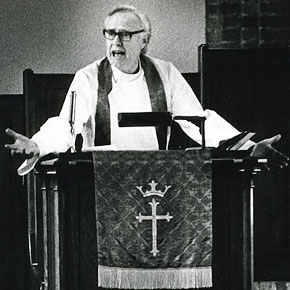
Upon his retirement in 1988, members of his congregation founded the Vincent L. Hawkinson Foundation to continue the tireless spirit of this advocate for justice. Effective March 28, 2017, the Vincent L. Hawkinson Foundation for Peace and Justice will be the Hawkinson Fund at Grace University Lutheran Church. The Fund keeps his dream alive by recognizing those who have made long-term contributions to the causes of peace and justice with the Hawkinson Honorary Award, and by encouraging students who have demonstrated a commitment to peace and justice with the Hawkinson Scholarship.
“We’ve got to go out and wage peace! The world is waiting for it.”
During his 30-plus years of service to Grace University Lutheran Church, Rev. Hawkinson served his parishioners with exemplary compassion and care. Never losing sight of the world and its pain, he continually reminded his people of their responsibility to respond to the suffering of society. He was outspoken against oppression and inequality in all its forms.
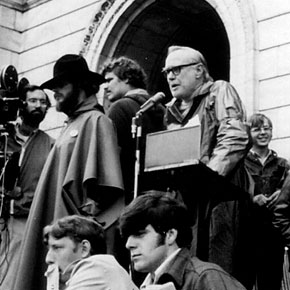
Rev. Hawkinson believed it was the duty of religious leaders to speak up and act against injustices and violence in the world. He marched in the South during the Civil Rights movement. Later, during the war in Vietnam, he was a vigorous opponent to the war effort and openly voiced his views. He urged fellow pastors and the church at large to take a stand against the war, but, as he said later, most of the time he felt very much alone.
A son of Swedish Lutheran immigrants, Rev. Hawkinson was born in 1915 and grew up on a farm near Taylors Falls, MN. He graduated from Augsburg College in Minneapolis and eventually enrolled in Augustana Seminary in Rock Island, IL, graduating in 1944 — the same year he married Gloria Lindgren.
Rev. Hawkinson served in a number of churches on the East Coast before being called by the Lutheran World Federation to help settle European refugees in the aftermath of World War II. In 1952, he and Gloria returned to the United States, where his pastorates included a church in Brooklyn, NY that he helped to integrate during the 1950s.
“The peace and justice movement centers around folks, known and unknown, who stand for something great and grand beyond themselves. And our world needs them.”
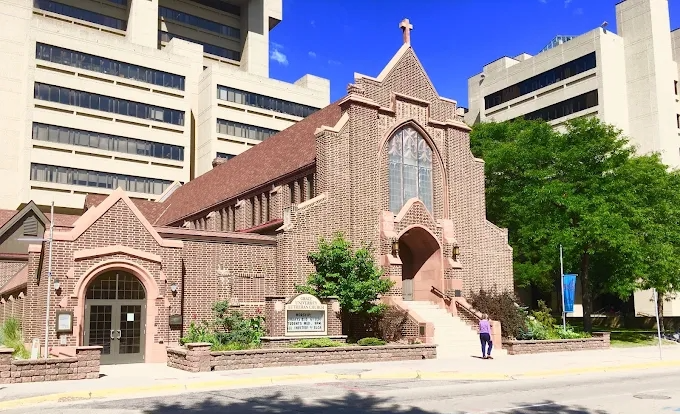 In 1956, Rev. Hawkinson was called to Grace University Lutheran Church in Minneapolis, where he served until he retired in 1988. He continued to minister at several other Lutheran churches after he retired from Grace and passed away in 2001 at age 86. Through the Fund, his presence remains and his witness endures.
Meet Our 2026 Hawkinson Grant Awardees
As Pastor of Grace University Lutheran Church for more than 30 years, Rev. Hawkinson liked to say that he preached with the Bible in one hand and the newspaper in the other. He called on faith leaders and communities of faith to act boldly for peace and justice. As we navigate the aftermath of Operation Metro Surge, as we continue to witness injustices and violence against beloved neighbors, his message rings out as clear as ever.
Just as we were preparing to post the Hawkinson Scholarship Application in January, we felt a strong calling to pivot and instead offer small grants to individuals and grassroots organizations who were doing on the ground mutual aid peace and justice work.
We are delighted to introduce you to the recipients of the 2026 Hawkinson Mutual Aid Grants. These are the peace and justice leaders of our time and these are their stories.
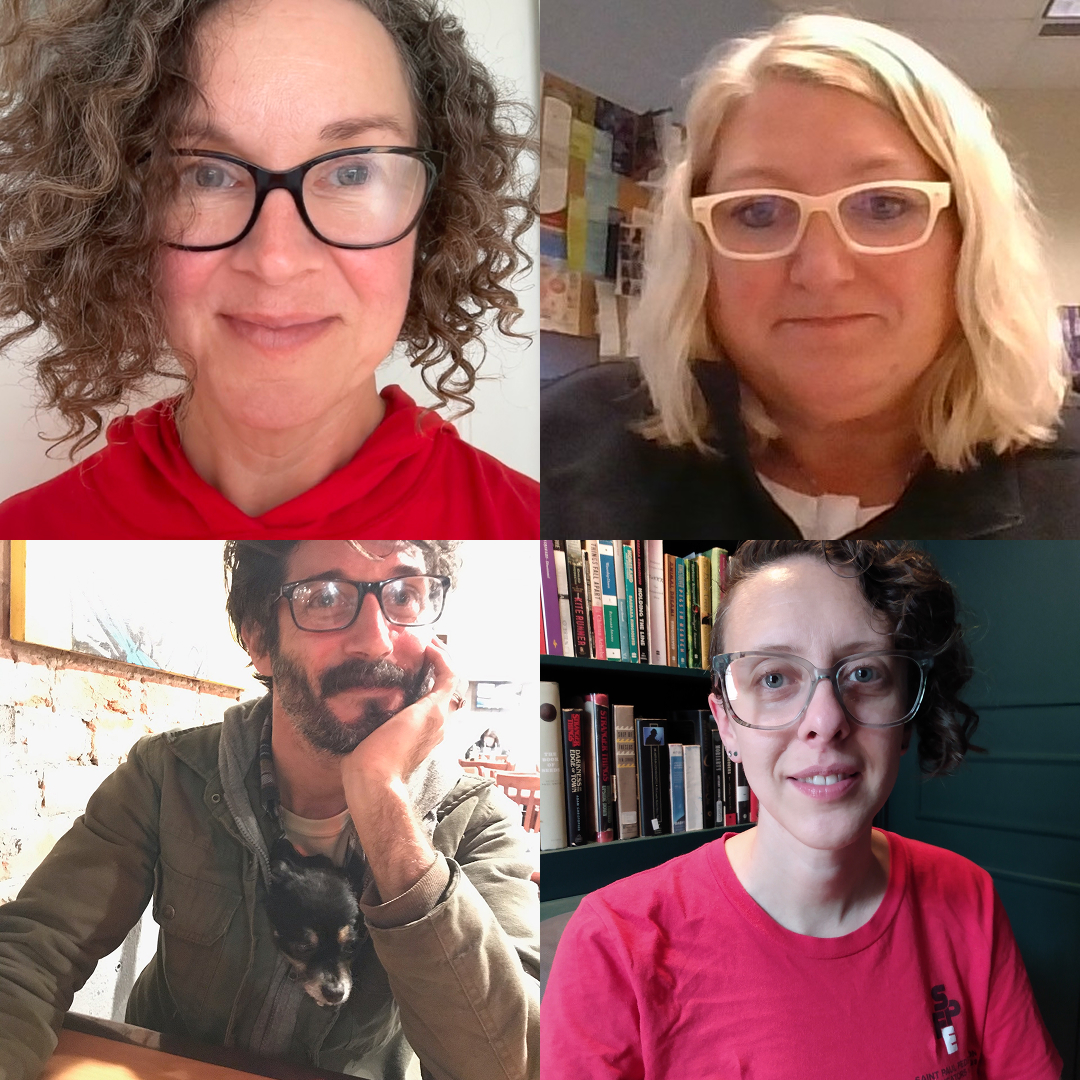
SPOKES is a mutual aid organization that emerged in the midst of Operation Metro Surge, connected to the Hubbs Center for Lifelong Learning in St. Paul. SPOKES was founded to maintain the networks of care that formed during Operation Metro Surge and continue to raise funds to provide timely, emergency financial relief to Hubbs’ students to keep them from dropping out of school.
The Hubbs Center is the Adult Basic Ed program for St. Paul Public Schools. Hubbs provides free English Language Learner classes, GED support, job training, and college prep classes for adult learners. Students at the Hubbs Center are mostly BIPOC and New Americans who come from more than 100 countries and speak 82 languages. About 70 percent of these students are low-income. For many of our students, an unexpected car repair, a medical bill, or the sudden “fallout” from immigration enforcement can mean the difference between graduating and dropping out. Current systems are often too slow or too rigid, requiring eviction notices, lengthy paperwork, or complicated documentation that our students cannot easily navigate.
They may face many barriers, but Hubbs students are strivers and survivors. They are proactively working to make their lives better through education.
When Operation Metro Surge started in early 2026, it hit students at the Hubbs Center hard, and many needed additional support. That’s when the amazing Hubbs Community went to work. Hubbs staff, retirees, volunteers, neighbors, and strangers organized to patrol around our building, deliver food, and fundraise for rent and other needs.
Hubbs’ teachers and SPOKES founders, Kris Klas and Carlynn Miller-Gore, stepped into the roles of site leads and coordinators with our union, the St. Paul Federation of Educators. Kris and Carlynn vetted volunteers. Kris organized site patrol shifts to ensure coverage for our busy times, a huge task for a school that is open from 8:30 AM to 8:00 PM. By arranging for large food donations, they also turned the Hubbs Center into a food distribution site.
Rob Morton, another Hubbs teacher, worked with community members in the music industry to raise funds to support impacted students and neighbors. With Zion Community Commons and Open Market MN, he helped organize staff around grocery pickups and deliveries to homebound students. Other staff members monitored the whereabouts and tactics of Metro Surge agents, keeping the Hubbs’ community well-informed and safe. It was incredible and heartening to see staff members’ dedication and generosity in taking on these extra, unpaid duties to protect and provide for our students.
The connections and community care that Hubbs provided during Operation Metro Surge inspired us to think about how we could build on the momentum and strengthen the Hubbs community. The community response to the ICE occupation in the Twin Cities demonstrated the powerful resistance and strength of our Hubbs community, and we wanted to create a sustainable mutual aid program to support our students now and through what may come next. This is what inspired the formation of SPOKES.
We witness the resiliency and grace of our students every day, and this motivates us to keep working toward justice. In a recent conversation with a student who received rent and grocery assistance, she shared that while Operation Metro Surge was incredibly difficult, she also saw how good, kind, and generous people were, and that made her hopeful. Reflecting on the devastating impacts of ICE, she was never bitter or angry. Instead, she was simply grateful and talked about giving back to the community in the future.
With support from the Hawkinson Fund for Peace and Justice, SPOKES will continue to build a future that works to build solidarity and keep education safe for all.
Hubbs SPOKES Members:
- Kris Klas, Hubbs Teacher
- Carlynn Miller-Gore, Hubbs Teacher
- Rob Morton, Hubbs Teacher
- Amy Stotzheim, Hubbs Counselor
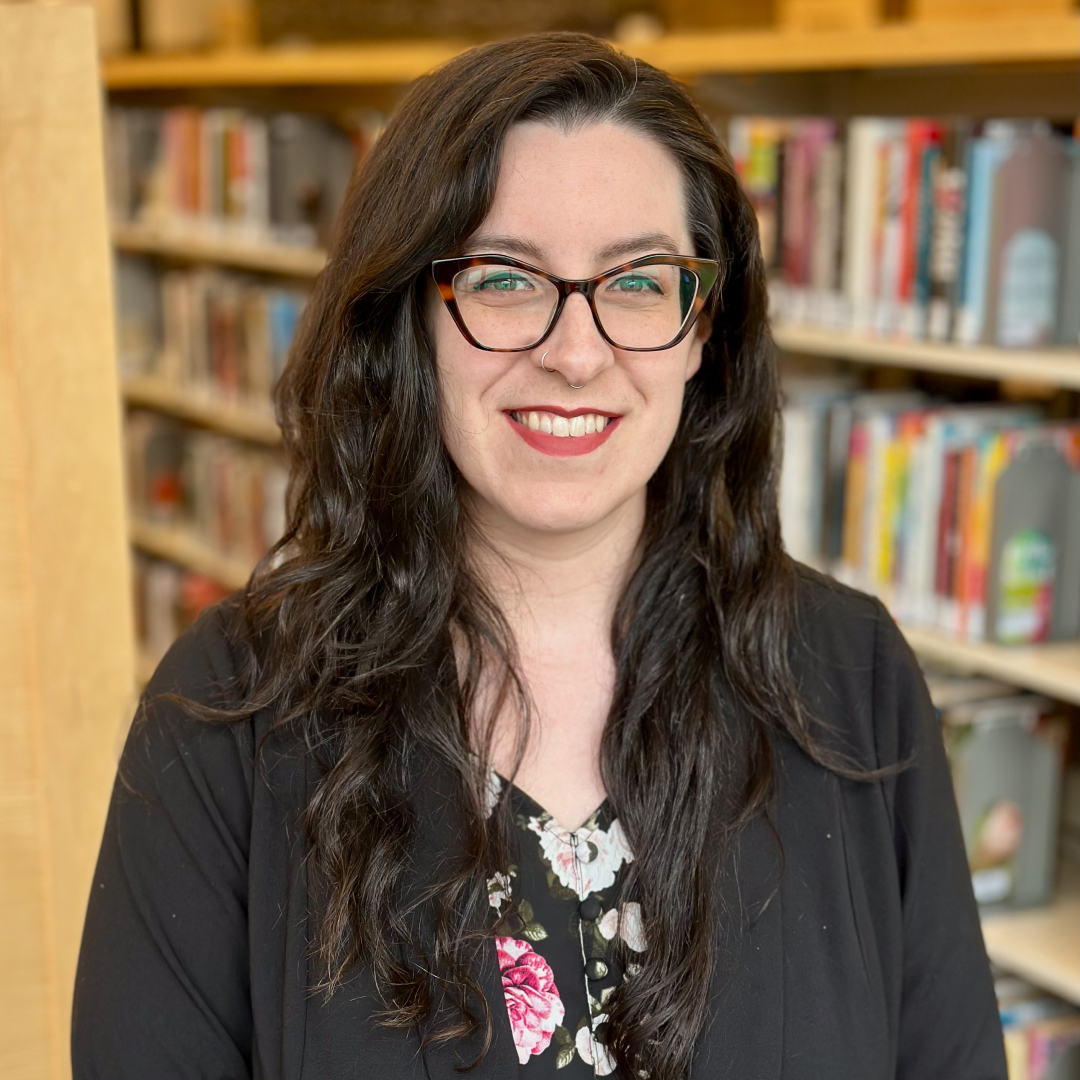
My name is Audrey McCann (’26), and I am a recent graduate of United Theological Seminary of the Twin Cities, where I received an MDiv in Unitarian Universalist Studies. I hold a BS in Communication Studies from the University of Texas at Austin. My background before ministry was in journalism, branding, and user experience design—fields that taught me how to listen deeply, communicate clearly, and build systems that center human needs.
I am deeply connected to the Nokomis East neighborhood in Minneapolis, where I live with my partner and our three senior pets. My life and work here are rooted in my faith and my belief that spiritual care is a form of mutual aid—a way of showing up for one another in both crisis and everyday life.
In the wake of Operation Metro Surge, our neighborhood experienced heightened anxiety, displacement, and a deep need for connection. I worked alongside my neighbors, collaborating on community defense and mutual aid efforts, often juggling multiple overlapping roles as community organizer, chaplain, and connector. Much of my work focused on offering spiritual and emotional support to everyone who calls Minneapolis home.
This summer, I served as the Community Care Steward for the Nokomis East Neighborhood Association (NENA)—a temporary, full-time volunteer role funded by the Hawkinson Grant. I provided one-on-one spiritual and emotional care, grounding exercises at community meetings, and guided meditative and reflective activities. I also proactively reach out to those who might otherwise fall through the cracks—new families, folks experiencing housing instability, and anyone navigating life transitions or everyday stressors. This work built upon relationships forged during Metro Surge and often served as a balm for still-fresh spiritual wounds.
This work matters because community resilience is built one connection at a time. In moments of upheaval, people need to feel seen, heard, and supported not just by systems, but by each other. Spiritual and emotional care fills a gap that traditional social services often can’t reach. It creates space for grief, hope, and simple human presence—and that presence can be profoundly healing.
My Unitarian Universalist faith is central to this work. I am training for ministry because I believe, as Rev. Hawkinson did, that faith communities must act boldly for justice—not just through advocacy, but through direct, compassionate care for our neighbors. The UU principle of affirming the inherent worth and dignity of every person guides my approach. I see every check-in, every grief circle, and every offered moment of calm as a small act of justice, a declaration that every person matters and deserves support.
The Hawkinson Grant made this role possible. The funding covered art supplies for reflective activities, care kits for unhoused neighbors, and my own basic living expenses while I devoted myself to this full-time volunteer position. Without this support, I could not have offered this level of care to our community. I am deeply grateful to the Hawkinson Fund for investing in this vision of grassroots, faith-rooted mutual aid.
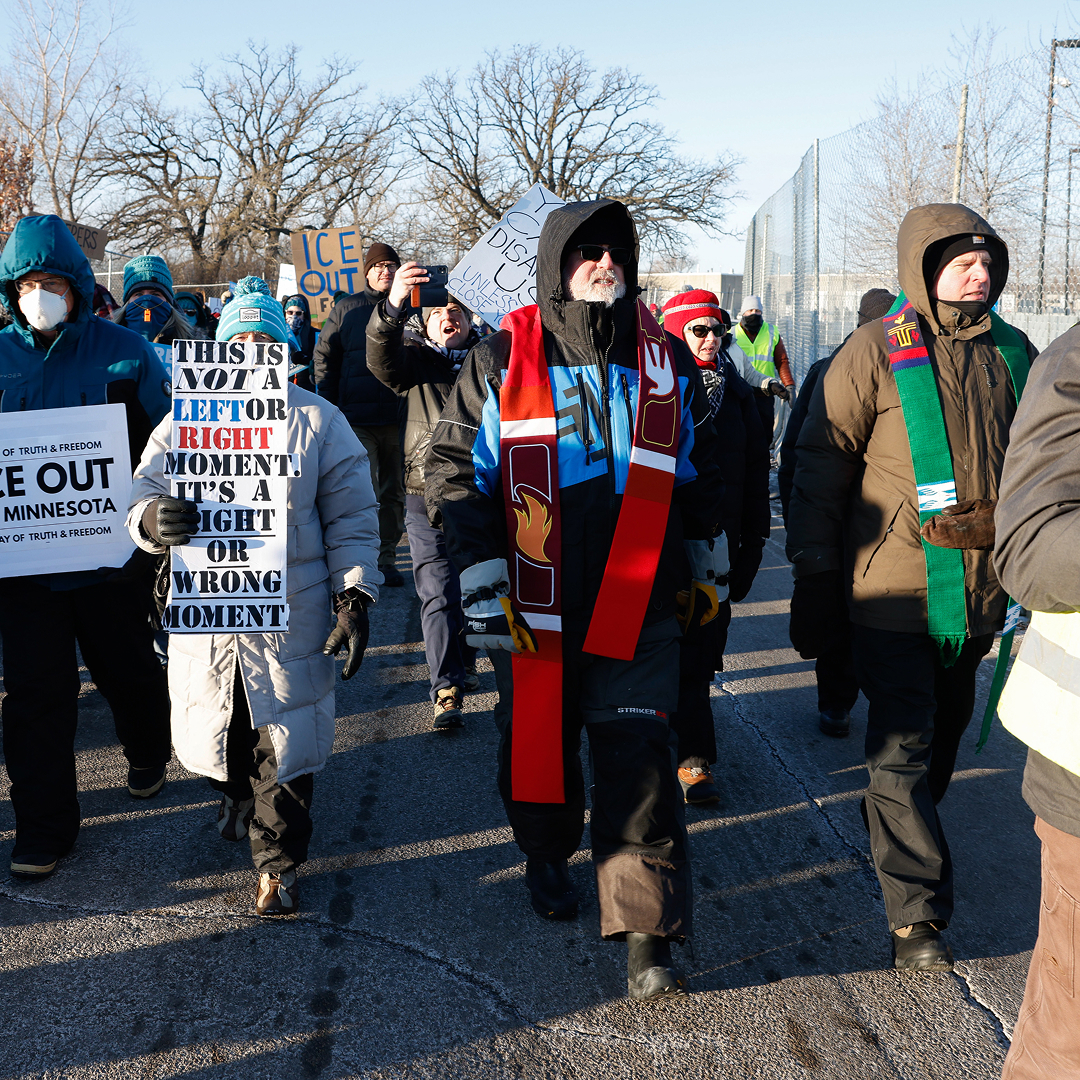
My name is Rev. Rob Smith, and I have served as pastor of Spirit of Life Presbyterian Church in Apple Valley for 14 years. Spirit of Life is a congregation deeply committed to being part of the community around us and to building partnerships that allow us to do more together than we could ever do alone.
Much of our community work has focused on food insecurity and housing stability. Our community garden began with the founding of Spirit of Life 30 years ago and continues today, providing fresh produce for the Rosemount Family Resource Center food shelf. For 13 years, we have also helped organize and lead the South of the River CROP Hunger Walk, and we helped establish the Apple Valley Community Little Free Pantry. We have also worked in coalition with other congregations to address the need for emergency shelter in Dakota County.
During Operation Metro Surge, that commitment to partnership became especially important. Spirit of Life worked alongside a coalition of five churches to provide mutual aid to 75 local families. Together, volunteers purchased, packed, and delivered weekly groceries while also responding to other immediate financial needs. It was a grassroots effort built around a simple commitment: when our neighbors face a crisis, we show up for one another.
That work continues today in a different form. We are currently walking alongside several families experiencing significant financial insecurity because of the changing immigration landscape, including challenges surrounding work permits and visas. While carefully protecting these families’ privacy and confidentiality, we are helping with rent, utilities, groceries, and substantial legal expenses. During the past year, we provided more than $42,000 in direct assistance to families at risk, beyond the resources committed to the earlier mutual-aid effort.
These are people deeply connected to our community—raising families, working, volunteering, leading in organizations, and generously helping others. Now, at a vulnerable moment in their own lives, their community has an opportunity to stand alongside them.
For us, this work is inseparable from our faith. Jesus continually draws our attention toward our neighbors, particularly those experiencing vulnerability, exclusion, or uncertainty. Faith calls us beyond simply caring about injustice to becoming participants in creating a more just and compassionate community. We believe our neighbors’ dignity is not determined by immigration status, income, or circumstance. They are our neighbors, and we belong to one another.
The Hawkinson Fund’s support makes that commitment tangible. This grant does more than help pay a legal bill or keep a family securely housed. It connects the Hawkinson Fund with a grassroots network of congregations, volunteers, and neighbors who are pooling resources so that families do not have to face these challenges alone. We are deeply grateful for partners who believe, as we do, that faith can move us toward justice—and that when communities come together, compassion can become concrete action.
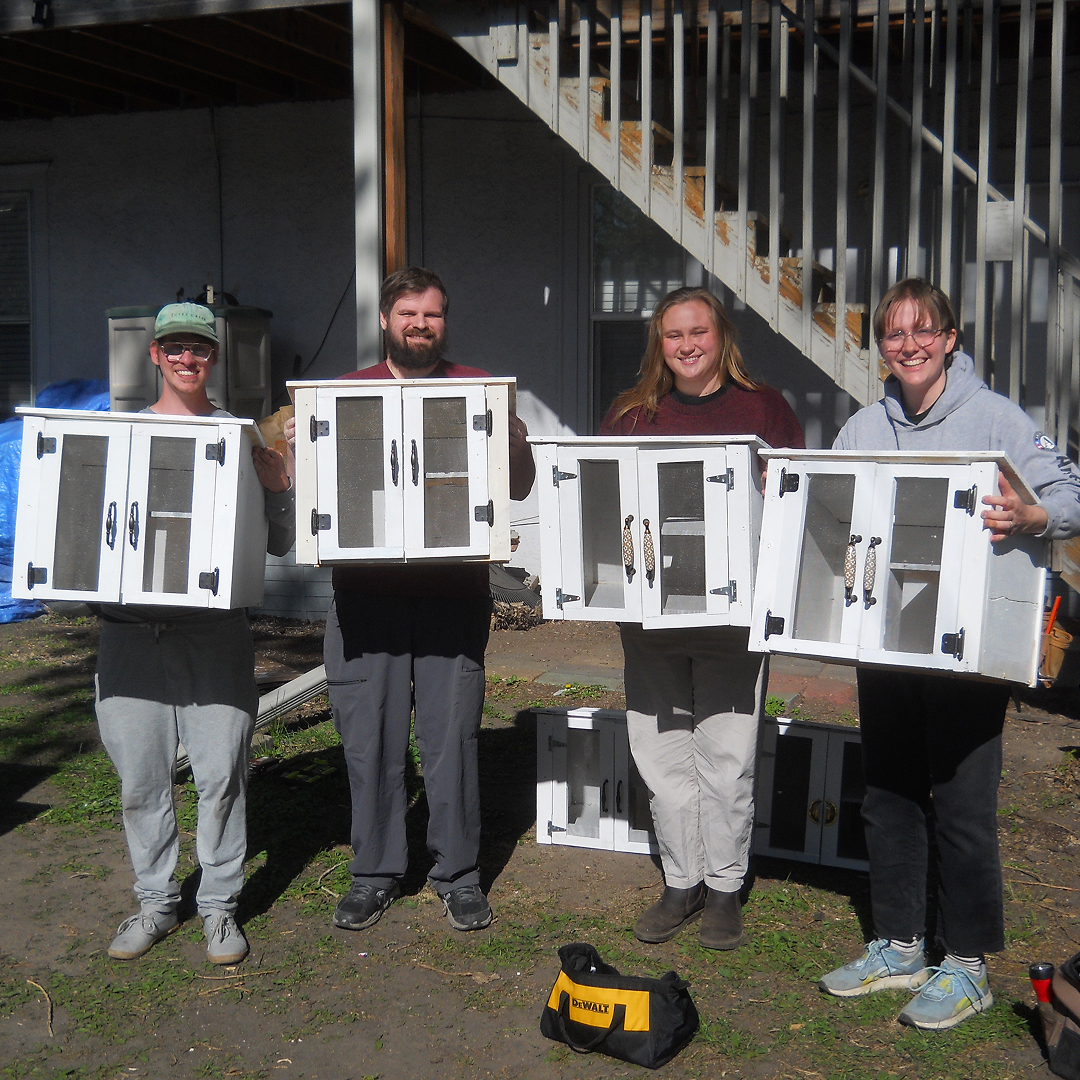
We are Whittier Water Coolers, or more affectionately known as the Hydration Honeys! We are a group of neighbors in Minneapolis’ Whittier neighborhood who came together this summer to bring water to our neighbors. Inspired by the little free food pantries throughout Whittier, this project responds to our neighbors’ needs during summer heat waves. The first water cooler was installed on July 16, 2026, to address the lack of publicly available water resources in the neighborhood. There are currently eight coolers across Whittier being regularly stocked with water, ice, and hydration packets, while we make friends and continue to grow together in community.
During Metro Surge, we raised about $33,000 for neighbors in Whittier who could not work or leave their homes. We also spent a lot of time connecting neighbors to local resources and helping them look out for one another. We started hosting monthly block parties to connect neighbors and grow relationships. These block parties have changed into monthly events that coincide with the Really Really Free Market and have been a nice way to connect with folks in Whittier and beyond. We started free food libraries in the spring to address neighborhood food needs, and in mid-summer, the water cooler project took off to complement the food shelf project.
The water cooler project is important because it shows folks that resources are for everyone and everyone has a role to play in the neighborhood. The project creates talking and connecting points for neighbors and gives us something to tend to where we live. Building relationships with those who live with, near, and around you is important because it creates resilience and strength where we live. It also encourages interconnectedness in a way that makes us take care of one another and take care of our neighborhoods. The more interconnected we are, the better the places we live will be.
In conjunction with the Whittier Water Cooler project, a group of community members developed a free food shelf project during neighborhood-wide meetings in Whittier and Lyndale in response to Metro Surge. The goal is to create an accessible and sustainable source of free food to address food scarcity in our community. Over six months, neighbors who started as strangers began to regularly gather to design, build, fundraise, crowdsource materials, decorate, and eventually place the shelves across Whittier, Lyndale, and Uptown.
The food shelves are designed to be maintained and stocked by various people across the community to increase the sustainability of addressing food scarcity. Neighbors are designing and distributing fliers, maps, and zines to increase awareness about the shelves, find new folks to host food shelves across South Minneapolis, and share more about our process so the project can continue to grow. If you are interested in learning more about the food shelf project, please reach out to MPLSFreeShelves@proton.me to get involved!
If you are interested in helping the Hydration Honeys in Whittier, email whittierlyndalepals@proton.me to get more information about ongoing projects and how to plug in. We would be happy to share models of how we started this project, including what has worked and what hasn’t. Making it scalable was important, but remembering that anything that has a positive impact in the community, no matter how small, is important, too. A long-term, sustainable project that is small is better than no project at all. The Whittier Water Cooler project grew from an idea to the first water cooler to a community movement.
As far as starting your own mutual aid project, our advice: go for it! We took an idea, made it happen, and so can you.
Our Lady of Guadalupe Free Clinic (OLGFC) is a faith-based nonprofit free clinic located in Worthington, Minnesota, that provides free medical care to anyone without health insurance. Its mission is to support the well-being of its community by providing access to healthcare, advocacy, and wellness education to those with limited healthcare options.
OLGFC was founded in 2011 when Fr. James Callahan (of blessed memory) saw parishioners’ need for healthcare. He noticed they were not seeking medical attention until the need was so great that emergency room visits occurred. He always mentioned how we needed to be the hands and feet of Jesus on earth, and that he didn’t feel he should be in charge of running a “clinic,” but the Lord told him, and he obeyed. This clinic operates because of and through the Grace of God.
Today, OLGFC is a nonprofit organization that accommodates close to 2,000 patient visits annually and maintains a waitlist—a reflection of the depth of unmet need in southwestern Minnesota. OLGFC is open and staffed five days a week, offering scheduled and drop-in appointments for primary and preventive care. All care is provided free of cost to patients who are uninsured or underinsured, regardless of their ability to pay.
Demand for OLGFC’s services has increased consistently over the years and accelerated in recent years due to rising immigration to the Worthington area. Community members who looked even a bit foreign felt scared to leave their homes; this impacted stores, businesses, and our clinic. Patients were coming in for their appointments and were afraid to pick up groceries, let alone their medications.
At OLGFC, we pivoted to telehealth and home visits if needed and partnered with local volunteers to purchase, organize, and deliver groceries and medications to community members. God has always been present at OLGFC, since its inception, through its growth, and now through the difficult times of insurance being more difficult to afford. The Hawkinson Grant funds will help us to continue to strengthen our strategy to do what we do best: serve those who need it. We will continue to pray to God for direction and always strive to be the hands and feet of Jesus on earth, starting in our community.
To learn more about Our Lady of Guadalupe Free Clinic, check out this short film that shines a light connecting the mission of OLGFC and the United States Council of Catholic Bishops (USCCB’s) three-year Eucharistic Revival.
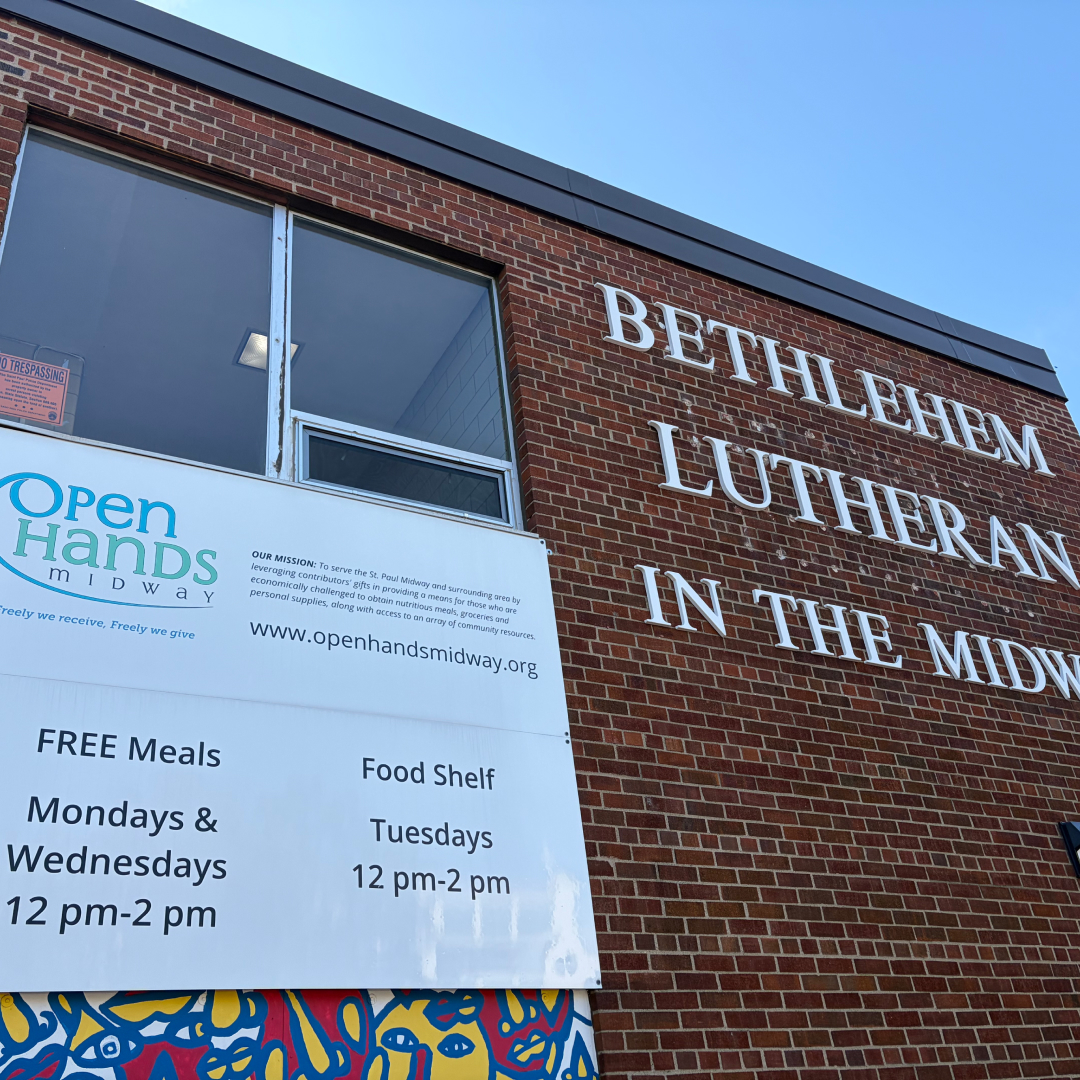
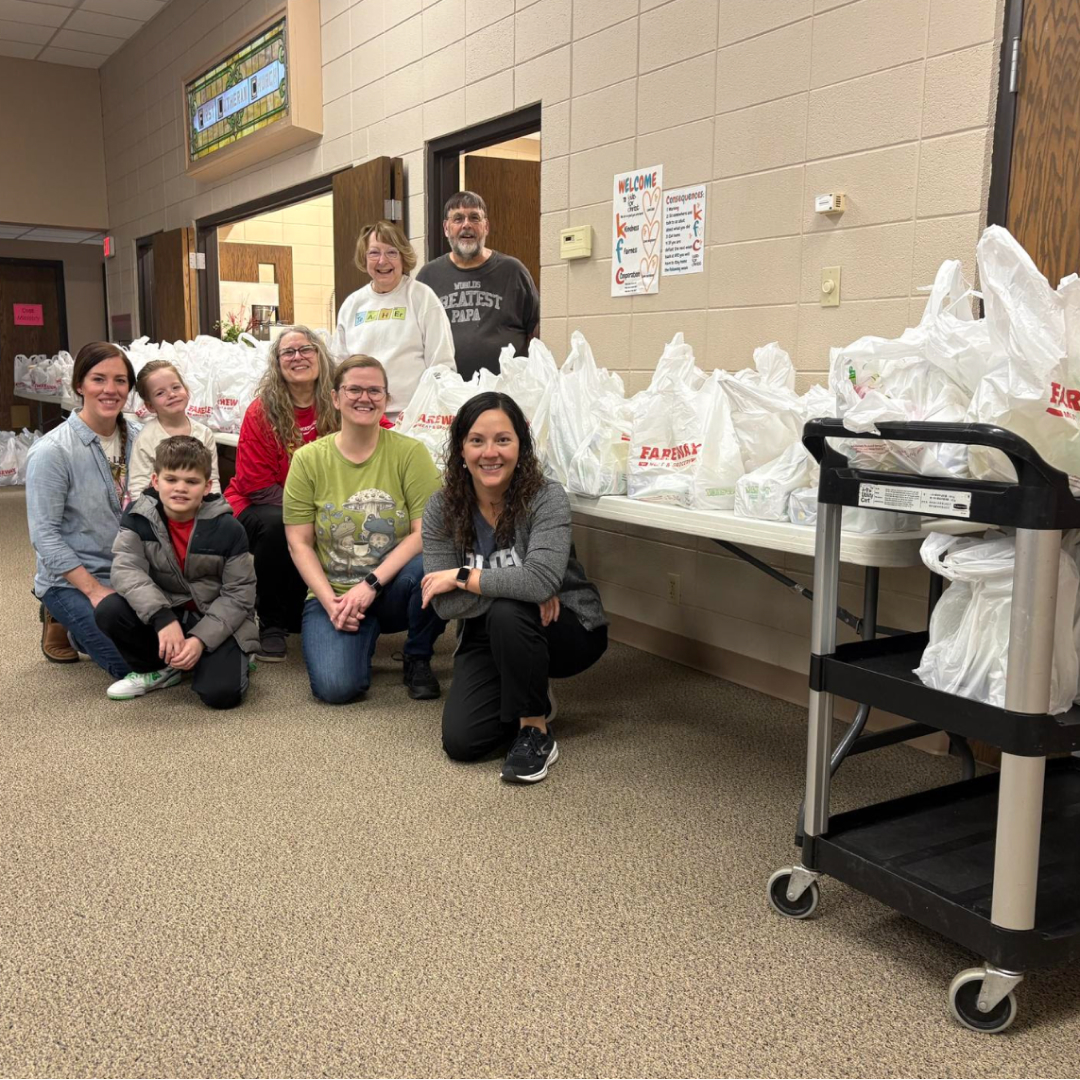
Open Hands Midway is a small, neighborhood-based nonprofit in Saint Paul working to strengthen Midway neighborhoods through food, care, and community connection. Our work began with a simple idea: people should be able to get what they need with dignity, without having to prove they deserve help. Each week we provide free community meals, groceries through our food shelf, rescued food and produce, hygiene supplies, and connections to health and community resources. We also work closely with neighborhood organizations and mutual-aid networks so food and supplies can move quickly to where they are needed most.
Open Hands grew out of the ministry of Bethlehem Lutheran Church in Saint Paul. In 2003, Bethlehem’s members began asking how the congregation could become more deeply connected to its neighborhood. That discernment led to neighborhood events, street ministry near Snelling and University, and eventually regular community meals. Open Hands Midway became an independent nonprofit in 2009, but we remain housed at Bethlehem and deeply connected to our Lutheran roots. Matthew 25:37–40 has long shaped the organization’s understanding of faith: feeding, welcoming, and caring for our neighbors in practical ways.
During Operation Metro Surge, Bethlehem in the Midway became an immediate mutual-aid hub. The church helped distribute more than one million diapers to families across the metro, along with formula, wipes, hygiene supplies, and over-the-counter medical supplies through dozens of community partners. Housed within the church, Open Hands kept doing the work we were already built to do.
Our doors stayed open for free meals, groceries, and basic necessities without requiring people to explain or justify their need. In a period of fear, lost income, and disruption, it mattered to have a congregation keeping community partners supplied with essentials for families with small children, alongside a dependable place where anyone could come for food. It also showed us the value of trusted neighborhood institutions working alongside one another in different ways.
In the months since, Open Hands has greatly expanded its outreach and partnerships with unhoused neighbors affected by encampment closures in Saint Paul. We have been working alongside other kitchens, organizers, and community members to provide hot meals and food to people living in encampments, staying connected while our unhoused neighbors face displacement, fear, and uncertainty.
The $1,000 Hawkinson Fund Grant will give Open Hands flexible funding for one of the most expensive parts of preparing hot meals: protein. By combining those dollars with food rescue, volunteer support, and our existing distribution infrastructure, we can stretch the grant significantly. We plan to spend the funds exclusively at immigrant-owned businesses in the Midway, especially businesses impacted by Operation Metro Surge, purchasing meat and other proteins for meals distributed to unhoused neighbors in encampments. In this way, the grant supports both immediate food needs and local businesses, keeping the money rooted in the neighborhood while strengthening the relationships that sustain this work.
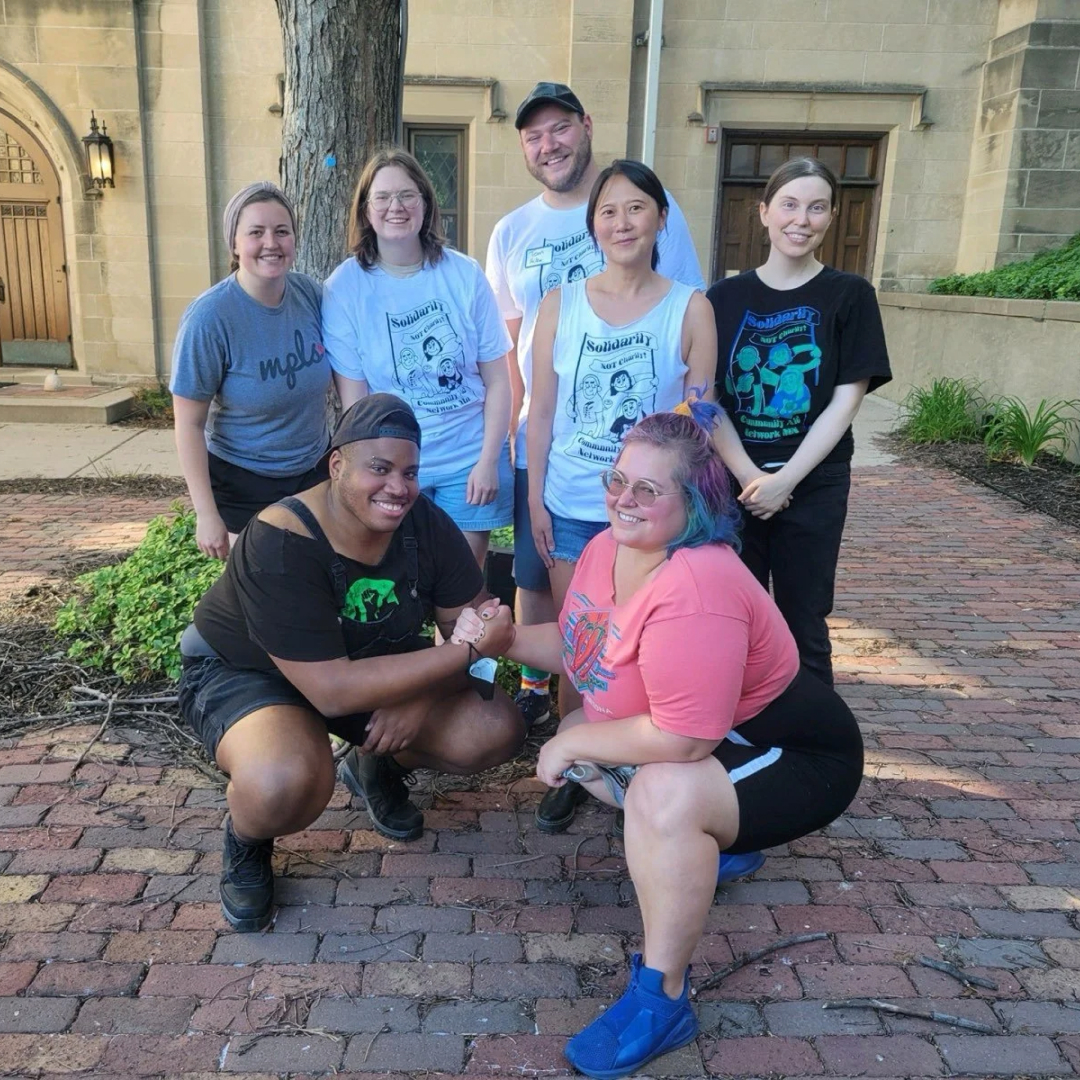
Community Aid Network (CANMN) is a grassroots volunteer-led organization located in Minneapolis’ Bancroft neighborhood, working to build solidarity with neighbors, organize volunteers, and redistribute resources to ensure everyone has the means for dignified survival.
CANMN was formed in August 2020, from the combined efforts of three volunteer-run mutual aid sites in the Whittier and Uptown neighborhoods: The People’s Library Mutual Aid at MCAD, Pimento Relief Services, and Provision Community Restaurant. All three pop-up donation/distribution sites were created independently to address the immediate needs of underserved communities suffering from the twin pandemics of COVID-19 and systemic racism, which were exacerbated after the murder of George Floyd. Before joining together, the three sites collectively served an estimated 18,300 people from June to August and distributed as many hot meals and household supplies as possible.
Since 2020, CANMN has expanded and raised funds to buy food, household cleaning supplies, fresh produce, hygiene products, over-the-counter medicine, diapers, infant formula, baby supplies, and more to support neighbors in need. They work to remove barriers between those giving and receiving aid, promote self-reliance, and promote long-term resilience in our community. The vast majority of community members served are working-class people of color.
Neighbors are never asked to verify citizenship status, prove household income, or show any sort of identification, and we do not collect any personal information. This leaves more time and energy to do the work that matters: meeting people’s immediate needs. Communications are translated, and interpreters are present at distribution sites to increase accessibility and remove hurdles. This work provides peace of mind, greater food security, and improved stability for the families served. We believe that direct action is an efficient alternative to bureaucracy to support our communities’ acute needs.
During the ICE occupation, community members were forced to take shelter in their homes and make the difficult decision to lose their incomes to keep their families safe. Families were torn apart by deportations and detentions, often with no resources for legal defense or money to buy groceries. As communities struggled, CANMN ramped up their delivery and distribution services to meet the overwhelming demand while people stayed home in fear of ICE violence. They also became a hub for diapers for many other pop-up mutual aid sites supporting people out of schools and churches.
Today, CANMN operates out of Bethel church in South Minneapolis, a congregation committed to social justice work in the Twin Cities that serves more than 500 families through weekly distribution days and provides home deliveries each week to 100 to 200 homes of community members who cannot come in person. While the overt threat of ICE has passed, families continue to live in fear of ICE and at a great financial deficit from staying home from work for months. With support from the Hawkinson Fund, CANMN continues to support our communities through mutual aid.
Each of us has needs, and each of us has something to contribute. Community is vital to our shared flourishing, and mutual aid makes liberation for all possible.
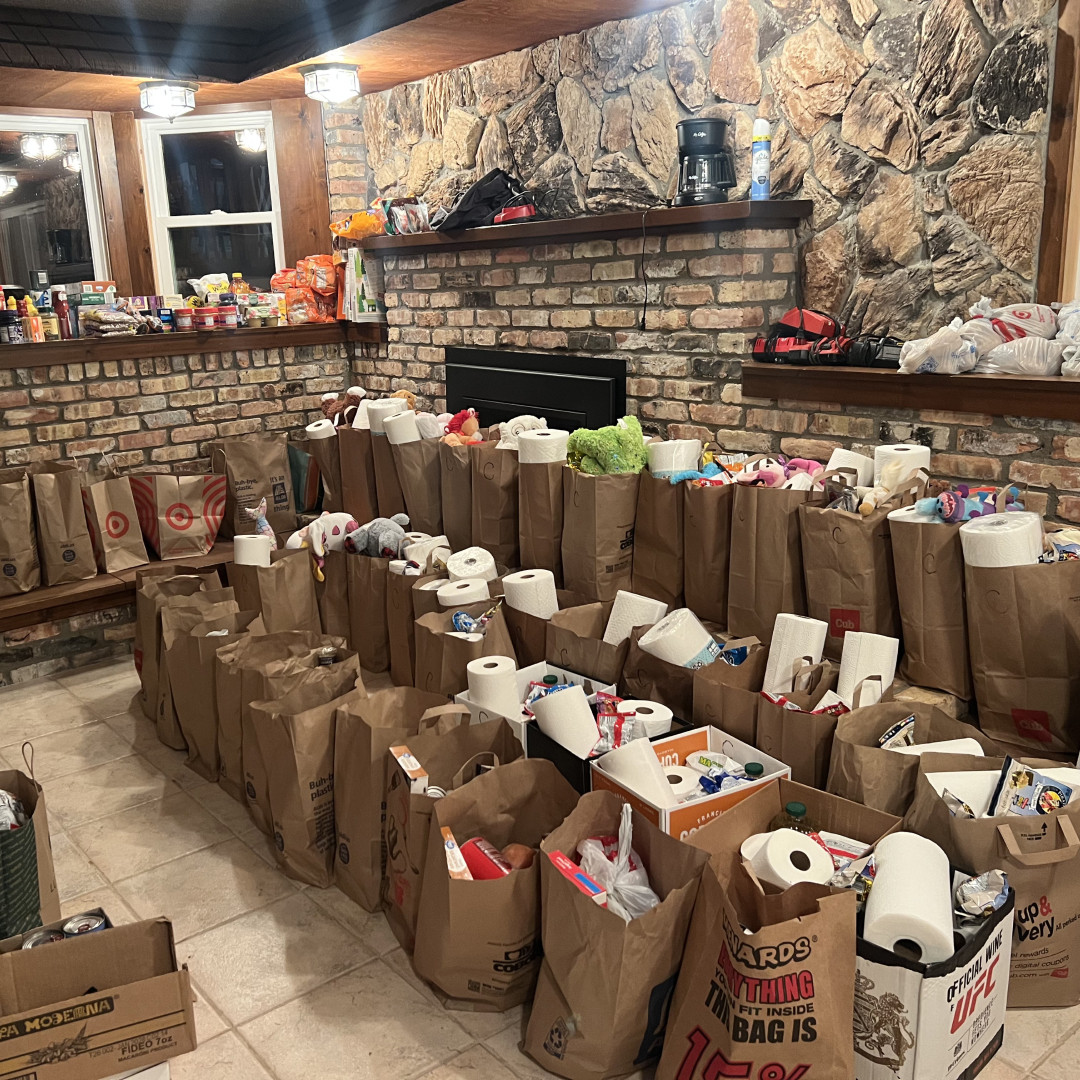
Immigrant Aid is a volunteer-run, grassroots group in Wright and Sherburne counties founded in 2025 in response to shared concern for our immigrant neighbors, as fear settled over Minnesota’s undocumented community. This group supports new Americans who are struggling to provide for their families and to meet their basic needs in times of transition, and helps immigrants advocate for their rights.
This group was founded when community advocate Patricia Rosales’ phone started ringing constantly as neighbors reached out to her with fear and concern. Families were afraid to go to the food shelf, to businesses, or simply show up to work in fear that ICE agents would come and tear their lives apart. Witnessing increased injustices, she shared her fears for immigrant neighbors with her trusted friend and community advocate Renee Cardarelle. Renee encouraged Patricia to organize a group of people who could stand together to protect their neighbors.
During Operation Metro Surge, our group collected, purchased, bagged, and distributed groceries and essentials like toilet paper, soap, shampoo, and toothpaste. We became shields. We offered Know Your Rights Classes, stood watch with children at bus stops, and drove students safely to and from school. We responded rapidly to community requests to protect vulnerable workers, mothers, fathers, and children.
We organized vigils on bridges and helped families fill out Delegation of Parental Authority (DOPA) forms and helped people track down notaries and immigration lawyers. We fixed broken headlights, cracked windshields, and damaged mirrors on vehicles, ensuring that they had no minor defects that could authorize ICE/Authorities to stop them. To date, we have supplied over 50 families with rent, utility, and car repair services.
Things have quieted down now, but the aftereffects remain. Immigrant Aid continues to distribute groceries and essentials to 70 to 80 families, and we have stepped in to pay overdue medical and household bills for families who were without income for many months. In some cases, neighbors have lost their shelters. We have been supporting our homeless neighbors with tents, sleeping bags, food, socks, underwear, and gas cards.
The mission of Immigrant Aid is deeply personal to each of us, and faith is at the heart of our work. We all come from different denominations and are blessed to have two pastors among us. We are united in faith and prayer and bound by the simple, straightforward truth: the color of someone’s skin and documentation status in no way dictates a person’s worth. Every human being deserves to be treated with absolute dignity. We know that this work is essential humanitarian justice. We pray for families, we pray for the safety of our volunteers, and we pray continuously for draconian policies to change for the better so that our immigrant neighbors can live, work, and thrive without fear.
The Hawkinson Grant has been a wonderful blessing that has allowed us to continue to do our work without pause. We are grateful for your generosity because things are still far from over. The aftereffects of Metro Surge are still very real, and we hope to continue to stand by our Immigrant neighbors firmly for whatever they need.
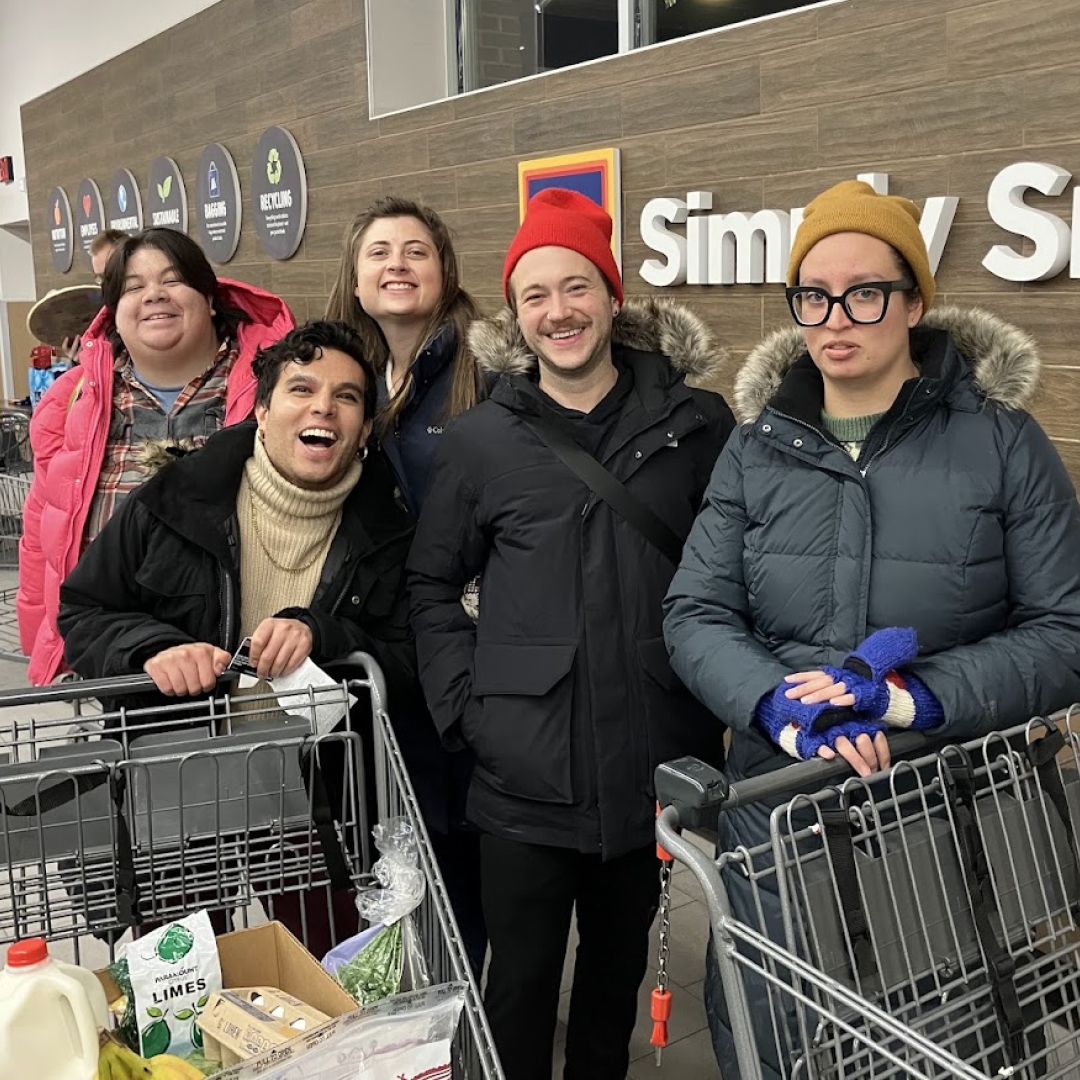
Neighbors Helping Neighbors (NHN) is a mutual aid group founded in December 2025 by faith leaders Anna Stamborski and Lena Gardner (’15) in response to a simple ask: a leader from a Latine-led organizing entity asked them to work with faith communities to coordinate rides for community members who were most directly impacted by ICE. Anna and Lena began connecting vulnerable neighbors with congregational networks and people of faith who could help grocery shop, run errands, and provide transportation.
In late December of last year, grocery and ride requests averaged three to five each day. The team worked to connect every neighbor with a carer. More and more people began asking for help, and soon, Catherine Elliott joined to help build systems and backend work. What started as a hyper-local mutual aid network in South Minneapolis, however, soon swelled to offer support across the Twin Cities metro. By early January 2026, daily requests jumped to more than 100.
As the Surge ramped up, volunteer interest grew, too, and in just five days, 200 volunteers expanded to nearly 800. Lyndale UCC, Brass Solidarity, friends, and family started sending money to support NHN work, and the team grew from 3 people to more than 60—vetters, connectors, and admins—all working to meet community needs. Neighbors Helping Neighbors soon partnered with Flourish Placemaking as a fiscal sponsor, enabling more effective fundraising while using individual donations to quickly address urgent needs. The team began working toward independent nonprofit status. To expand capacity and strengthen community partnerships, NHN added Whittier Alliance as a second fiscal sponsor—which opened more fundraising channels and forged deeper roots in Twin City neighborhoods.
To date, NHN has received more than 3,700 requests for support, 2,800 volunteer applications, and has raised more than $6.3 million to support rent assistance and mutual aid efforts.
Volunteer capacity and needs have shifted in the past few months, but NHN continues to strengthen mutual aid networks by responding to community-based asks. They have since helped a food shelf by matching neighbors who can give support with neighbors who have lost SNAP benefits. Neighbors Helping Neighbors has coordinated volunteers to patrol mosques during Friday prayer. As the midterms draw near, they are building democracy defense with MN Voice, Common Cause, Unidos, Immigrant Defense Network, and the Secretary of State, by vetting and training neighbors to provide rides to the polls for folks in need.
What began as a response to community needs in the midst of the ICE Occupation in Minnesota has powerfully shown what Minnesotans already know: neighbors care deeply for their neighbors. And hopefully, someday, Neighbors Helping Neighbors won’t exist. Not because the work isn’t important, but because neighbors will truly know their neighbors. Without hesitation, they’ll step in to help when there’s a need, and gather together when an occasion calls for celebration.
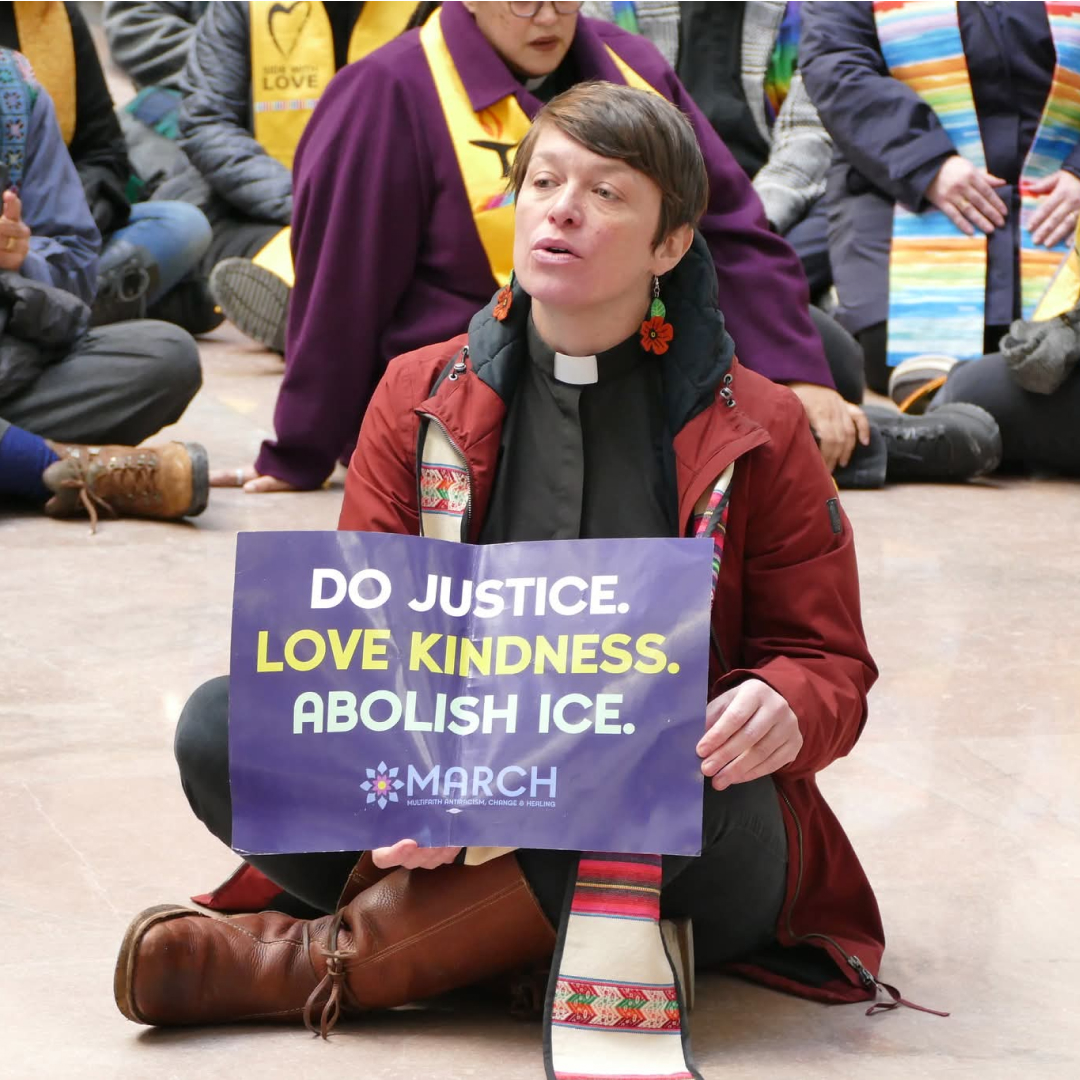
Multifaith, Anti-Racism, Change & Healing (MARCH) is an explicitly pro-queer, multifaith coalition committed to collective liberation that has been working together since 1991. For the first half of its history, MARCH was the multifaith roundtable that supported pro-LGBTQ work in Minnesota. We were very active in the effort to win marriage equality in Minnesota, and when marriage became legal on August 1, 2013, we celebrated and took a rest.
But almost one year to the day, on August 4, 2014, Michael Brown was murdered, and Lena K. Gardner (’15) reached out and asked us to use our relationships and power in followership of the work of Black Lives Matter Minneapolis. Since then, we’ve organized around the police killing of Jamar Clark, the occupation of the 4th Precinct, and the police killings of Philando Castille and George Floyd. We’ve also been in followership with the Indigenous-led climate justice at Standing Rock and Line 3.
We are working in this moment of state violence perpetrated by ICE out of this history and rooted in the same commitment that brought us to previous work: fierce, tender, and transformative love—of the Sacred and of our neighbors; a commitment to nonviolent direct action and non-cooperation; followership of organizers; and a commitment to relationships of trust and accountability.
On December 1, 2025, federal agents descended on the Twin Cities to begin ‘Operation Metro Surge.’ Just a month later, it swelled to “the largest DHS operation ever.” This enforcement action, though, affected many more people than the “worst of the worst” that agencies claimed they sought. In January, federal agents fatally shot a woman in the face and a man in the back, detained countless citizens and legal immigrants, and deployed chemical weapons around children during a school dismissal.
This recklessness endangered many of our neighbors who were sheltering in place. Parents kept American-born children home from school to avoid contact with federal agents. Naturalized neighbors were too afraid to shop for groceries. And assisted-living staff with pending asylum cases were forced into the impossible choice of going to their workplace and risking indiscriminate arrest or staying home safe but without a paycheck.
In response to the horrifying reality of Operation Metro Surge and its ongoing violence, MARCH leaders organized non-violent actions, community vigils, marches, and a lawsuit against the DHS. MARCH also came together to support and organize mutual aid efforts in our Minnesota communities. The guiding principle of mutual aid is that everybody needs help sometimes. Together, the voluntary, collaborative exchanges of money, resources, and services strengthen community and benefit everyone. During Operation Metro Surge, MARCH created the MN Together Fund to nurture mutual aid networks.
Since December 1, 2025, the MN Together Fund has dispersed nearly $600,000 to many organizations, including Minnesota Interfaith Coalition on Immigration, Iglesia Dios Habla Hoy, San Pablo Lutheran Church, Neighbors Helping Neighbors, and Indigenous support organizations. Much of this money has also gone directly to families for rental assistance, food assistance, and legal aid support.
The MN Together Fund has also supported detainee families, especially when the detainee is the only breadwinner in the household and their detention is a crisis for their families. MARCH leaders were also critical in organizing an ongoing lawsuit against the DHS that has had initial success with a preliminary injunction which allows for pastoral care access to Whipple detainees.
The Hawkinson Grant for Mutual Aid supports the ongoing work of the MN Together Fund to pool and share community resources across the state. As Minnesotans, we have demonstrated that we love our neighbors in real time, and through tremendous mutual aid we will continue to do so. Today, MARCH is working with leaders of affected communities to spread love and resources further through the MN Together Fund, by matching funds to trusted partners who are best positioned to meet the continuing and newly emerging needs of our neighbors.
All of our stories are bound together, and we know that liberty and justice for the few will never mean freedom for all. This is a moment mutual aid was made for. Join us.