The Role of Biblical Studies in Seminary

Academics Scripture

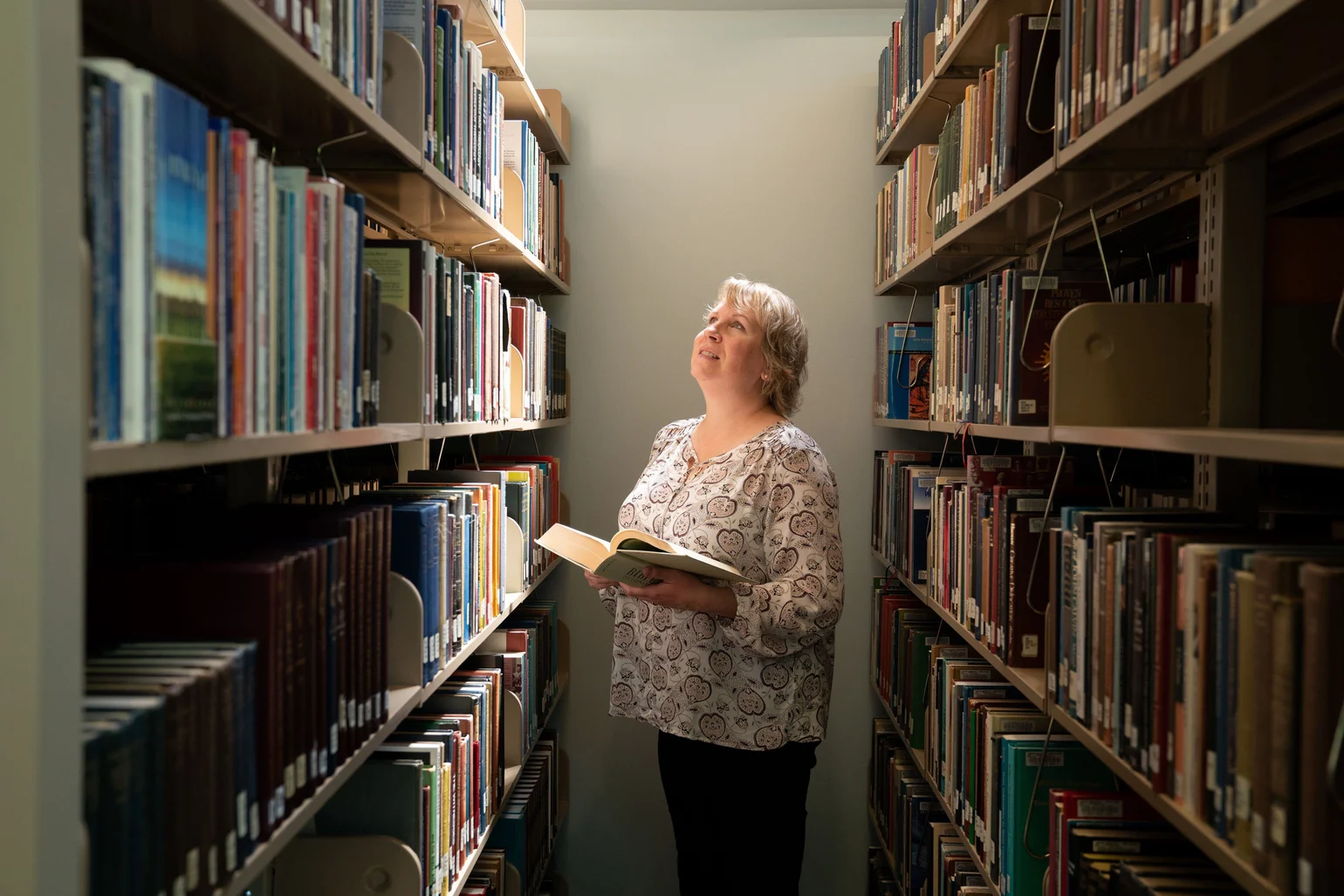
Biblical Studies photo UTS2019-055

At its most basic level, biblical studies involves studying the Bible. In practice, biblical studies involve the deliberate interplay of diverse disciplines—from ancient history, philology, and theology, to literary criticism, art, and comparative religion—to gain a contextual foundation for making meaning out of the Bible’s Old Testament (Hebrew Bible) and New Testament (Christian Bible).

Because of how these diverse disciplines inform the Bible and the Bible informs these disciplines, biblical studies are relevant to seminarians, whether they intend to preach, teach, write, practice art, or lead an organization.

What Is Biblical Studies?

The core focus of biblical studies is exegesis—a careful, analytical study of biblical texts that emerged from Judaic and Christian written traditions and became the basis for today’s Bible. To inform exegesis, subcategories of exploration include textual criticism, hermeneutics (the scholarly study of interpretation), biblical archaeology, biblical history, biblical languages (Hebrew, Aramaic, and Greek), and biblical theology.

Fields that undergird exegesis call for an understanding of the geographic, historic, and linguistic context in which the humans who wrote and translated early texts existed. By examining the location, culture, time, and language in which early biblical texts came into being, we gain meaningful clues for enriching our perspective about modern translations of biblical texts.

Biblical Studies vs. Theology: What Is the Difference?

As discussed above, biblical studies is concerned with the Bible. Through exegesis, biblical scholars strive to gain contextual knowledge about ancient texts—including the Hebrew Bible, the Dead Sea Scrolls, and the Septuagint—and the times in which they were created to illuminate biblical comprehension.

Theology, by contrast, is the broader study of God. Instead of solely examining the Bible book by book or passage by passage to discern the meaning of biblical texts, theological scholars use numerous sources to reflect on the nature of Divine reality and construct concepts, ideas, and imaginative descriptions to attempt to articulate ultimate reality. Though different in many ways, theology and biblical studies also complement one another.

What Does a Biblical Studies Degree Involve?

United Theological Seminary of the Twin Cities offers both a Master of Arts (36-credit) and a Master of Divinity (72-credit) degree in Biblical Studies. Both degrees require students to take classes in:

  • Religious Texts (such as the Hebrew Bible and New Testament)
  • Theological Tradition (basic theology courses and courses that explore the history of Christian or modern theology)
  • Ethics and Justice (including Christian or Comparative Religious Ethics)
  • Academic Contextualization (including biblical exegesis, as well as biblical Hebrew or New Testament Greek)

The MDiv in Biblical Studies degree requires a broader range of exploration that encompasses art and theology courses, world religions and global Christianity courses, a constructive theology course, and a social transformation course. It also features a section of vocational contextualization and skills courses that involve preaching, faith formation, and a congregational internship.

To learn more, visit United Theological Seminary of the Twin Cities’ Degree Programs page.

What Can You Do with a Biblical Studies Degree?

A biblical studies degree gives students an opportunity to deeply engage with the cultural and historical contexts, overarching narratives, theological themes, and critical issues of the Bible, as well as attend to the ethical implications of interpreting Scripture. These skills are well-suited for a variety of ministerial and academic roles—from parish ministry and chaplaincy to textual scholarship and teaching.

A biblical studies degree opens up many meaningful and impactful opportunities for individuals seeking to make a difference in the world. With a biblical studies degree, you can pursue paths aligned with your unique interests, skills, and calling.

A biblical studies degree from United will set you up for success in the following vocational paths and meaningful pursuits:

  1. Congregational Ministry: Many biblical studies MDiv graduates become ordained or licensed ministers and serve as pastors, providing spiritual leadership, guidance, and support to congregations. They have the privilege of leading worship, preaching sermons that bring the Bible to life, conducting sacraments, and offering pastoral care to individuals and communities.
  2. Public Policy and Advocacy: As a biblical studies graduate, you can contribute to shaping public policy by working in advocacy organizations, think tanks, or government agencies. Drawing on your theological understanding, analytical skills, and ethical frameworks, you can research, analyze, and advocate to influence policies addressing poverty, human rights, environmental justice, and other social concerns.
  3. Social Services and Community Development: With a biblical studies degree, you can work in various social service organizations, nonprofits, or community development agencies. This may involve coordinating programs that provide food, shelter, healthcare, and counseling services to vulnerable populations. As a seminary graduate, you can contribute your spiritual and contextual insights and compassionate approach to help uplift individuals and communities facing social challenges.
  4. Nonprofit and Community Leadership: As a biblical studies graduate, you can contribute to the nonprofit sector, assuming roles in organizations focused on research, educational pursuits, social justice, community development, advocacy, or humanitarian work. You can lead religious, or faith-based organizations, guiding their vision, mission, and community outreach efforts.
  5. Writing and Publishing: With a biblical studies degree, you can explore opportunities in writing and publishing, such as becoming an author or editor, or contributing to theological journals and publications. This avenue allows you to share insights, research, and perspectives on matters of faith, art, and spirituality.
  6. Chaplaincy: With a chaplaincy certificate, you can use your MDiv in Biblical Studies degree to work as a chaplain in various settings such as hospitals, military organizations, correctional facilities, universities, and hospices. You can offer spiritual and emotional support to individuals during challenging times—through your understanding of context—and provide counsel as well as facilitate religious services and rituals.
  7. Teaching and Education: If you are a biblical studies graduate who obtains a doctoral degree, you can pursue careers in teaching biblical studies, theological studies, or ethics at educational institutions, including seminaries, colleges, universities, and other schools. You can then inspire and educate students, fostering understanding and dialogue about faith, spirituality, and religious traditions.

These are just some of the many examples, as the true possibilities are vast! A biblical studies degree equips you with a strong foundation in theology, ethics, exegesis, and spiritual leadership, enabling you to make a positive impact in the lives of individuals, communities, and society as a whole—in your own unique way.

Online Biblical Studies Programs Are Flexible, Accessible, and Rigorous

United’s MA and MDiv in Biblical Studies degrees are both offered online through our distance learning program. Online biblical studies courses allow for greater flexibility in studying and learning, a feature that accommodates students wherever they live and in concert with other demands on their time.

In fact, not only can biblical studies students at United obtain their degree 100 percent online, but many courses are offered asynchronously! Asynchronous courses offer students additional online resources and the freedom to access course instruction and complete coursework at their own pace. Synchronous courses, by contrast, require all students to attend a live online class at the same time. A mix of synchronous and asynchronous biblical studies courses offers both the benefit of community and the flexibility of faculty-guided independent study.

As United students will attest, online courses are no less rigorous than those taught in traditional in-person courses. Like the best biblical studies degree programs at other seminaries, United’s MDiv in Biblical Studies requires students to dive deeply into exegesis through intensive studies related to world religions, art and theology, religious texts, and biblical Hebrew and New Testament Greek.

Is a Biblical Studies Degree Right for You? 

No matter what faith or belief community you come from, there is a place for you in United’s biblical studies degree programs. Whether you intend to promote biblical scholarship or serve as a teacher, preacher, or community leader, United’s programs will equip you with the knowledge, creativity, ethical grounding, and spirit of curiosity that will enhance your vocation.

We invite you to sit in on a class, view our recorded past events and lunches, or set up a meeting with a faculty member or student to learn more!

Interested in learning more about or pursuing a biblical studies degree at United Theological Seminary of the Twin Cities in Minnesota? Contact our admissions team to explore our 30+ seminary degree programs today!

Explore More Articles

Rev. Dr. Justin Sabia-Tanis to Be Appointed Inaugural Occupant of the Wilson Yates Chair in Theology and the Arts

Saint Paul, Minnesota, United States, June 5, 2026 — United Theological Seminary of the Twin Cities is elated to announce that Rev. Dr. Justin Sabia-Tanis will be appointed as the first-ever occupant of the Wilson Yates Chair in Theology and the Arts. Until now, he has served faithfully as the McVay Associate Professor of Christian Ethics and Social Transformation, as well as Director of the Social Transformation Program. Before joining United, Rev. Dr. Sabia-Tanis served as a congregational minister in Boston, Honolulu, and San Francisco, and was Director of Leadership Development for Metropolitan Community Churches, after which he joined the United Church of Christ (UCC). Rev. Dr. Sabia-Tanis’ ministry includes community organizing and advocacy. He has served as managing director at the Center for LGBTQ and Gender Studies in Religion (CLGS) as well as communications director for the Hawai’i Equal Rights Marriage Project, the National Center for Transgender Equality, and Out & Equal Workplace Advocates. He received his PhD in Interdisciplinary Studies from Graduate Theological Union in 2017, his DMin from San Francisco Theological Seminary in 2003, and his MDiv from Harvard Divinity School in 1990. His teaching experience spans courses at the University of Arizona, Pima Community College, Iliff School of Theology, and Pacific School of Religion. As an eminent academic and theologian, Dr. Sabia-Tanis’ scholarship has deepened the study of the intersection of art and LGBTQ+ religious identity. He recently completed writing Queer Spirituality, Sexual Orientation, and Gender Identity in Contemporary Visual Art, to be released later this year by Bloomsbury Academic. Dr. Sabia-Tanis also wrote the groundbreaking book Transgendered Ministry, Theology and Communities of Faith (Cleveland: Pilgrim Press, 2003; Wipf & Stock, 2018) and authored a chapter in Transbiblical: New Approaches to Interpretation and Embodiment in Scripture (Louisville, KY: Westminster John Knox Press, 2025).  In 2024, he gave a lecture in the art gallery of Hennepin Avenue United Methodist Church in Minneapolis, MN, on the life and art of Keith Haring. Dr. Sabia-Tanis is himself an artist, and he hones and cultivates the creative expression of the artist-theologians enrolled in his courses. In his announcement of the news to United students, Dr. Kyle Roberts—Dean and Vice President for Academic Affairs—connected Rev. Dr. Sabia-Tanis’ education and qualifications to the field of theology and the arts. “Dr. Sabia-Tanis appreciates and champions the legacy of Dr. Yates and the leadership of United in the area of arts and theology,” Dr. Roberts asserted. “He also advocates for the intersection of the arts with movements for social justice and will bring to his teaching and leadership a synergy of theology and arts, along with his contributions to the education of social transformation at United.” Rev. Dr. Molly T. Marshall, President, commended the news for this esteemed member of the faculty. “The wide-ranging scholarship of Dr. Justin Sabia-Tanis will elevate this position as the arts serve as a medium for social transformation.” Established in 2025 by generous gifts from friends, alums, and former United faculty, the Wilson Yates Chair in Theology and the Arts is an endowed faculty position named after Rev. Dr. Wilson Yates, President Emeritus and Distinguished Professor Emeritus of Religion, Society, and the Arts. Yates joined United’s faculty in 1967, became Dean in 1988, and was made President in 1996. He retired from the seminary in 2005, having led and innovated in theology and the arts, deepened scholarship, and integrated the subject as a pillar of United’s academic programs. Rev. Dr. Yates celebrated the news and is eager to see Rev. Dr. Sabia-Tanis installed into the chair. He reflects, “I am very excited about Justin’s selection for this role. His studies at the Graduate Theological Union in Berkeley will provide an important background to this work. Justin brings a solid understanding of the relationship to the arts in theology, the church, and everyday life. It is not incidental that he is also a practicing artist.” On his appointment to the chair, Rev. Dr. Sabia-Tanis shares, “United has valued and integrated the arts since our founding. They are critical to how our students are formed, and in the ministries and projects they will lead when they graduate. I am so honored to move into this important role at United and continue the incredible legacy of Wilson Yates. And I'm looking forward to the ways this program will evolve and grow in the coming years.” The installation of Dr. Sabia-Tanis into the Wilson Yates Chair in Theology and the Arts will be formally celebrated at Fall Convocation on Thursday, September 24, 2026. Details will be announced in the coming months. About United Founded by the United Church of Christ (UCC) as a welcoming, ecumenical school that embraces all denominations and faith traditions, United Theological Seminary of the Twin Cities has been on the creative edge of progressive theological thought and leadership since it was established in 1962. Today, United continues to educate leaders who, through the eyes of faith, engage in the dismantling of systems of oppression, exploring multi-faith spirituality, and pushing the boundaries of knowledge. Contact Nathanial Green (he/him) Director of Marketing and Communications press@unitedseminary.edu • 651.255.6138 Admissions and Enrollment admissions@unitedseminary.edu

The Barnabas Society: Transformative Legacies Lead to Transformed Lives

Since its inception in 1962, United has been sustained by faithful supporters who believe in transformative theological education. This support—from one-time gifts, to recurring contributions, to stock designations—makes the seminary’s work possible. One group of dedicated donors, members of United’s Barnabas Society, views their commitment to progressive seminary education as extending for a lifetime and beyond. The Barnabas Society recognizes those who have included United in their estate plans. This group of donors is named after Barnabas, an apostle introduced in Acts 14, who provided financial support to his fellow apostles with proceeds from the sale of his land. These gifts typically reflect donors’ values— principles that are aligned with the seminary’s mission, vision, and values. Legacy gifts ensure these precepts are practiced in the classroom and realized beyond the institution’s walls. Gifts can include income-return gifts and beneficiary designations—financial support that expresses the donor’s philanthropic intent while providing long-term stability for United’s mission—and the legacies of their generosity live on in endowed scholarships, faculty chairs, lectureships, and seminary programming.  Now in its 35th year, the Susan Draper White Lecture is a beloved annual event that draws leading feminist theologians to the seminary. It was named after the grandmother of United alum Rev. Cil (Priscilla) Braun† (’83), who, with other donors, endowed the lectureship series. Cil and her husband, Jack, the Barnabas Society through a legacy gift that helped support the newly established Wilson Yates Chair in Theology and the Arts. Cil’s legacy has spanned decades, and her generosity has informed, inspired, and continued to support United students. In 2021, United celebrated the creation of a tenure-track faculty position. Rev. Dr. Andrea Johnson (’17, ’23) and David Fry committed $1.75 million to endow the Johnson-Fry Chair in World Religions and Intercultural Studies, held by Dr. Munjed M. Murad. As an ordained Unitarian Universalist minister, Andrea sought to strengthen the seminary’s commitment to Interreligious Engagement, saying, “While we are grounded in our Christian heritage, more and more we are educating leaders in religions other than Christianity. And we need all our religious leaders to be deeply responsive to the realities of religious and spiritual diversity.”  An alum and trustee, Andrea knows how United impacts its students and their communities, sharing, “I was transformed by the education I received at United, and [I] am passionate about supporting its future.”  At Fall Convocation in September 2024, Dr. Demian Wheeler, director of Advanced Studies, was formally installed into the newly endowed Sophia Chair in Religious and Theological Studies. Former trustees Keith Bednarowski and Dr. Mary Farrell Bednarowski, Professor Emerita of Religious Studies (1976–2004), who funded the Chair, have been part of the United community for nearly 50 years. In an interview for the Winter 2024 Issue of VOICES, Mary reaffirmed her commitment to United, saying, “I have a very deep faith that this full-of-life seminary will persist and flourish for many, many years. Keith and I want to be part of that flourishing.” The Barnabas Society is growing. In 2026, trustee Therese Pautz and her husband, David Graham, committed to a legacy gift. Reflecting on their decision, she writes, “We support United because it equips spiritual leaders and community healers.” She continues, “Those vocations are essential to every civil society, especially in times of conflict.” Therese and David will be formally welcomed into the Barnabas Society later this year.  These are just a few shining examples of the cadre of faithful supporters who have made legacy gifts and transformative commitments. Their support for the sustained life of the seminary reflects their values and belief in the importance of United’s mission in our ever-evolving world.  To discuss a legacy plan, contact Rev. Dr. Cindi Beth Johnson, Vice President for Advancement, by email at cbjohnson@unitedseminary.edu or by phone at 651.255.6137.

United Receives Grant from Wabash Center for Teaching and Learning in Theology and Religion

SAINT PAUL, MINNESOTA, UNITED STATES, April 23, 2026. In the wake of Immigration and Customs Enforcement’s (ICE’s) occupation of the Twin Cities metro region since early 2026, United Theological Seminary of the Twin Cities (United) has secured a $30,000 grant to help, as the grant proposal states, “process our experiences of this time, both the blessings and the trauma, so that we can remain effective and compassionate educators and draw on our experiences in a way that expands student knowledge.” The grant, awarded April 2, will fund a two-year project titled “Teaching and Learning in the Midst of Government-Sponsored Violence.” Rev. Dr. Justin Sabia-Tanis, Associate Professor of Christian Ethics and Social Transformation, supported by the McVay Endowment, and Director of United’s Social Transformation program, envisioned, proposed, and will lead the project in collaboration with staff. “We wish to explore,” Rev. Dr. Sabia-Tanis articulated in the grant proposal, “which practices of support are effective for faculty, and other school personnel, that equip us to engage with our students in healthy, meaningful, and productive ways during this time of crisis. Drawing on what we learn, we seek to create a model of care for our seminary that can be of use to other educators who may face unprecedented and protracted times of crisis and violence.” Rev. Dr. Sabia-Tanis identified these goals: Offer effective support to seminary faculty and staff who have been impacted by Operation Metro Surge, both for the well-being of our educators and to consider how best to support students who have been traumatized by the political situation.  Draw upon our experiences as practitioners in justice and peace efforts in the Twin Cities to provide meaningful learning opportunities for our students preparing for ministry and community service.  Collect and preserve primary sources related to street activism and chaplaincy, and the life and teachings of faith communities as a resource for teaching about theology, worship, arts, and social movements. Make these materials accessible to a wide audience of educators, with a focus on theological educators and faith leaders. Citing United’s long history of educators acting as public theologians—60+ years of teachers who were also protesters, activists, justice-practitioners, and thought leaders—Rev. Dr. Sabia-Tanis noted that “this moment offers us the opportunity to live our faith and to transparently share that with our students.” Explaining further, he continued, “The religious imperative to act with compassion and to champion justice, especially for those who are vulnerable, is not simply an academic conversation but an authentic expression of our beliefs and convictions. Loving your enemy and welcoming the stranger are not theoretical questions but ones that demand our concrete and immediate responses daily.” In her grant award letter, Dr. Nancy Lynne Westfield, director of the Wabash Center, asserted, “Your project is poised to make a significant impact.” She added, “Thank you for your commitment to strengthening teaching and the teaching profession.” Rev. Dr. Cindi Beth Johnson, Vice President for Advancement—with whom Rev. Dr. Sabia-Tanis collaborated during the proposal process—remarks, “By virtue of our location and in honor of the stellar work that our alums, students, faculty, and community members have done, and are doing, United is uniquely qualified to lead this important project.” With support from the Wabash Center, United’s Leadership Center for Social Justice is working to gather and preserve information about non-violent resistance and resilience efforts that emerged in response to the ICE Occupation in Minnesota. We invite you to be a part of this project, especially those in Minnesota; please click here to submit resources and materials developed in response to Operation Metro Surge. About United Theological Seminary of the Twin Cities Founded as a welcoming, ecumenical school that embraces all denominations and faith traditions, United Theological Seminary of the Twin Cities has been on the cutting edge of progressive theological thought leadership since it was established in 1962. Today, United continues to educate leaders who dismantle systems of oppression, explore multi-faith spirituality, and push the boundaries of knowledge. About the Wabash Center for Teaching and Learning in Theology and Religion Founded in 1996 through a Lilly Endowment, Inc. “Theological Teaching Initiative” grant, the Wabash Center for Teaching and Learning in Theology and Religion in Crawfordsville, IN, exists to “enhance and strengthen education in theology and religion in theological schools, colleges, and universities.” In so doing, it aims to enhance the “impact of religious leadership on both congregations and public discourse.” Contact Nathanial Green (he/him), Director of Marketing and Communications United Theological Seminary of the Twin Cities press@unitedseminary.edu • 651.255.6138