Meet Terri Burnor, Director of Alumni and Church Relations!

A few weeks ago, I met with Terri Burnor, our new Director of Alumni and Church Relations. We were sitting in The Context Cafe, where, over the years, students have discussed homework and community, theological questions, politics and pop culture. It was the perfect milieu to talk with Terri about United’s alumni, our relationships with faith communities, and her experience as an alum of United.

Ordination1 (1)

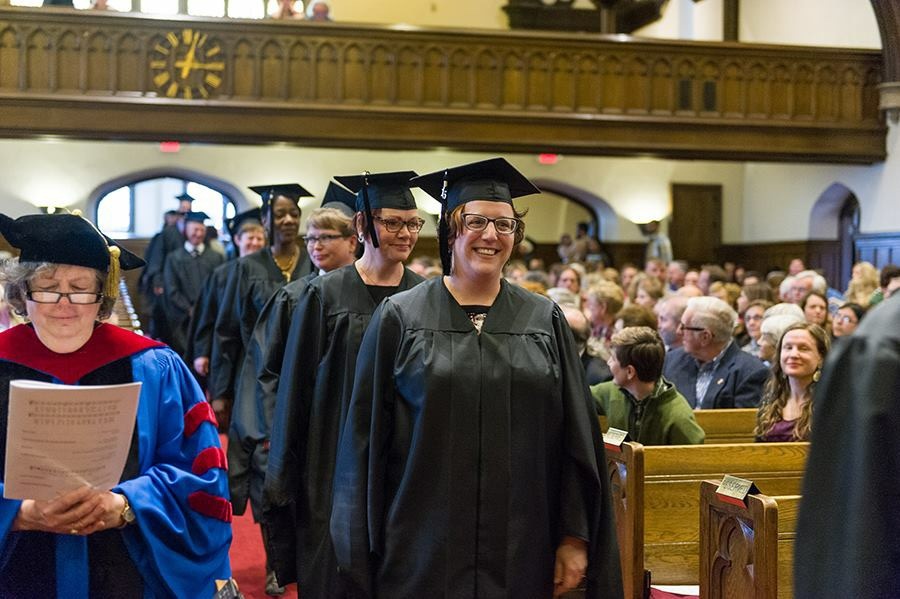
“I was a student here for four years doing my M.Div. program,” explains Terri, who graduated in 2015 with a concentration in women’s studies. “In some ways I feel like I haven’t left because I was a student, and then I was on the alumni council, and now I’m on the other side of it. I feel like I’m getting a really big gift in trying to see the institution in kind of a different way. You get to see the behind the scenes, how hard everybody is working, and how much people care about the school and where we’re going and what the possibilities are. And that is so energizing for me and why I wanted to come back on staff.”

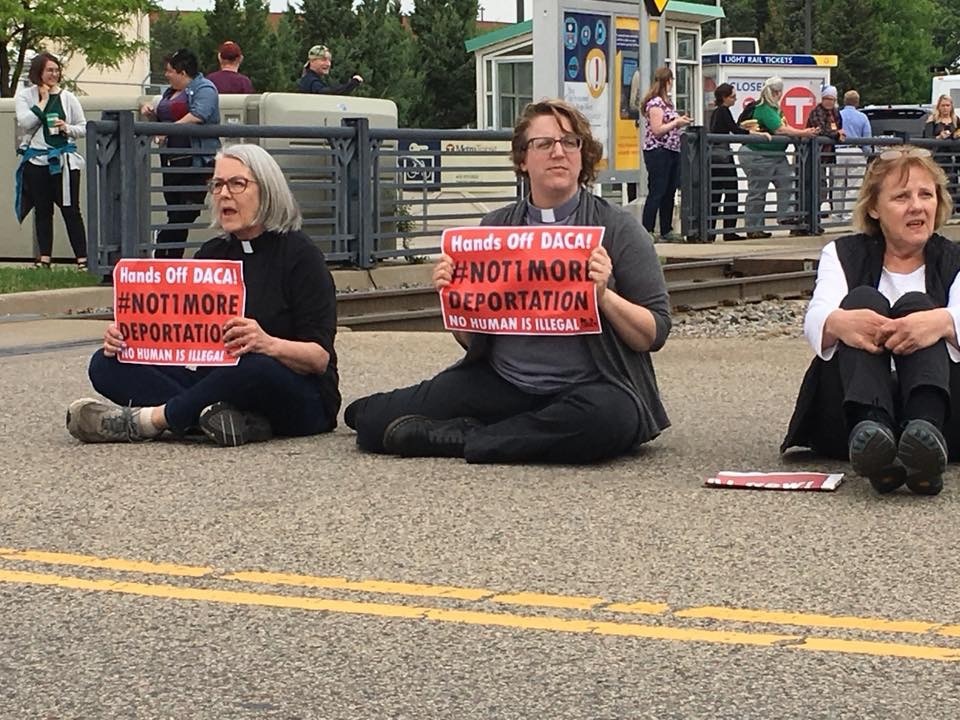
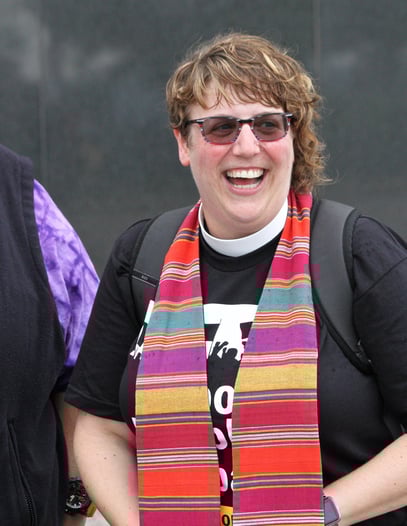
Terri’s excitement about working “behind the scenes” at United, meeting alumni and collaborating with staff, is consistent with her commitments to community. Earlier this year, Terri was ordained within the Unitarian Universalist church at First Universalist Church in Minneapolis. She has also been a participant and organizer for the Poor People’s Campaign here in Minnesota. But as Terri tells it, she has not always been involved with community organizing: “When I came to United back in 2011, my life before had been pretty ordinary, in the most mainstream definition of ordinary. I hadn’t really engaged much in social justice work, operating in my own little world doing my own little thing. Coming here and really learning and seeing and being with people who are living out their values in profound ways, that really started me on this crash course about movement work and organizing and social transformation and how that comes from your own faith or values or worldview––whatever theological, spiritual or philosophical perspective you may come from.”

United-graduation

The activism she participated in as a student, and the activists she learned from in our faculty have profoundly impacted Terri’s current practice. “I was part of the steering committee of the Minnesota Poor People’s Campaign and seeing Carolyn Pressler and Sue Evans out there getting arrested, and two weeks later I was out there and I got arrested. There are connections between these different parts of community– United alums, current students, faculty, staff–– all engaged in the actual practice of living out who we are and why we came here in the first place.”

“We’re a small institution, and yet, when you’re out on the street and in relationship with grassroots organizers, we’re the ones that show up. We’re the ones that you’ll see there. That to me is a testament to who we are as a school.”

IMG_0023

Terri’s experience in the UU church and her activism are grounded in relationship-building, which is likewise central to her work as Director of Alumni and Church Relations: “I am director of alum and church relations, so I get to do it both on the institutional side, what are our churches doing out in the world, as well as our individual alums. Part of what makes me so excited about this role is hearing stories, sharing stories, and making connections so that none of us are operating in isolation. We can see the different ways that we are engaging. Whether it is on smaller scales, within a church itself as a pastor or a priest working in ministry, we can see what they’re doing within and beyond their community. And then you have alums who came here who have no interest in working in a traditional religious institution working in what might seem like a purely secular venture, whether it’s corporate America or a nonprofit that has nothing to do with faith. And yet, they still chose to come here for a reason. How does that inform who they are in the work they do? I want to lift those up and see how the connections never end.”

Terri’s words about continued relationship have particular resonance in light of our campus move to St. Paul in January 2019. “The move is something that I hold with great respect and great care, because place and physicality have a lot of emotional tenor and literal resonance for people,” says Terri. “I take great care in really recognizing and understanding the wide range of emotion and feelings that people have. This place out here was a place where so many of us deconstructed and reconstructed who we are and who we want to be. I really honor that. I also am really proud of United for taking this big step and recognizing what it needed to do and not being afraid of that. There is a lot of power in that, and we need to claim that power. We could have shied away from it and been afraid and not taken that big of a risk, but we didn’t. We are moving into the city, a vibrant location that has so many access points and so many opportunities that frankly are not possible here. My hope is that we can both grieve together and remember together and celebrate together. We can honor our past. We can share our stories and we can know that those stories will continue on into wherever and however United will become.”

IMG_0117

Reflecting on her time at seminary as well as the possibilities of the future, Terri sees that, at United “we are always striving and trying and growing and experimenting and seeing where we can push things and who we can be. The alums are doing the same thing! That continual relationship that we can share across and with each other doesn’t have to end: it’s dynamic. That is all part of the vision of what I want to engage with and bring forth at United. When you graduate that relationship keeps going in really positive, beautiful, and meaningful ways.”

As United continues to foster relationships with current alumni, future alumni, and different communities of faith, Terri’s wisdom and passion are indispensable. Terri embodies the power of a United education and the vibrancy of our alumni community. I can’t wait to see what she brings in her new role!

Explore More Articles

Rev. Dr. Justin Sabia-Tanis to Be Appointed Inaugural Occupant of the Wilson Yates Chair in Theology and the Arts

Saint Paul, Minnesota, United States, June 5, 2026 — United Theological Seminary of the Twin Cities is elated to announce that Rev. Dr. Justin Sabia-Tanis will be appointed as the first-ever occupant of the Wilson Yates Chair in Theology and the Arts. Until now, he has served faithfully as the McVay Associate Professor of Christian Ethics and Social Transformation, as well as Director of the Social Transformation Program. Before joining United, Rev. Dr. Sabia-Tanis served as a congregational minister in Boston, Honolulu, and San Francisco, and was Director of Leadership Development for Metropolitan Community Churches, after which he joined the United Church of Christ (UCC). Rev. Dr. Sabia-Tanis’ ministry includes community organizing and advocacy. He has served as managing director at the Center for LGBTQ and Gender Studies in Religion (CLGS) as well as communications director for the Hawai’i Equal Rights Marriage Project, the National Center for Transgender Equality, and Out & Equal Workplace Advocates. He received his PhD in Interdisciplinary Studies from Graduate Theological Union in 2017, his DMin from San Francisco Theological Seminary in 2003, and his MDiv from Harvard Divinity School in 1990. His teaching experience spans courses at the University of Arizona, Pima Community College, Iliff School of Theology, and Pacific School of Religion. As an eminent academic and theologian, Dr. Sabia-Tanis’ scholarship has deepened the study of the intersection of art and LGBTQ+ religious identity. He recently completed writing Queer Spirituality, Sexual Orientation, and Gender Identity in Contemporary Visual Art, to be released later this year by Bloomsbury Academic. Dr. Sabia-Tanis also wrote the groundbreaking book Transgendered Ministry, Theology and Communities of Faith (Cleveland: Pilgrim Press, 2003; Wipf & Stock, 2018) and authored a chapter in Transbiblical: New Approaches to Interpretation and Embodiment in Scripture (Louisville, KY: Westminster John Knox Press, 2025).  In 2024, he gave a lecture in the art gallery of Hennepin Avenue United Methodist Church in Minneapolis, MN, on the life and art of Keith Haring. Dr. Sabia-Tanis is himself an artist, and he hones and cultivates the creative expression of the artist-theologians enrolled in his courses. In his announcement of the news to United students, Dr. Kyle Roberts—Dean and Vice President for Academic Affairs—connected Rev. Dr. Sabia-Tanis’ education and qualifications to the field of theology and the arts. “Dr. Sabia-Tanis appreciates and champions the legacy of Dr. Yates and the leadership of United in the area of arts and theology,” Dr. Roberts asserted. “He also advocates for the intersection of the arts with movements for social justice and will bring to his teaching and leadership a synergy of theology and arts, along with his contributions to the education of social transformation at United.” Rev. Dr. Molly T. Marshall, President, commended the news for this esteemed member of the faculty. “The wide-ranging scholarship of Dr. Justin Sabia-Tanis will elevate this position as the arts serve as a medium for social transformation.” Established in 2025 by generous gifts from friends, alums, and former United faculty, the Wilson Yates Chair in Theology and the Arts is an endowed faculty position named after Rev. Dr. Wilson Yates, President Emeritus and Distinguished Professor Emeritus of Religion, Society, and the Arts. Yates joined United’s faculty in 1967, became Dean in 1988, and was made President in 1996. He retired from the seminary in 2005, having led and innovated in theology and the arts, deepened scholarship, and integrated the subject as a pillar of United’s academic programs. Rev. Dr. Yates celebrated the news and is eager to see Rev. Dr. Sabia-Tanis installed into the chair. He reflects, “I am very excited about Justin’s selection for this role. His studies at the Graduate Theological Union in Berkeley will provide an important background to this work. Justin brings a solid understanding of the relationship to the arts in theology, the church, and everyday life. It is not incidental that he is also a practicing artist.” On his appointment to the chair, Rev. Dr. Sabia-Tanis shares, “United has valued and integrated the arts since our founding. They are critical to how our students are formed, and in the ministries and projects they will lead when they graduate. I am so honored to move into this important role at United and continue the incredible legacy of Wilson Yates. And I'm looking forward to the ways this program will evolve and grow in the coming years.” The installation of Dr. Sabia-Tanis into the Wilson Yates Chair in Theology and the Arts will be formally celebrated at Fall Convocation on Thursday, September 24, 2026. Details will be announced in the coming months. About United Founded by the United Church of Christ (UCC) as a welcoming, ecumenical school that embraces all denominations and faith traditions, United Theological Seminary of the Twin Cities has been on the creative edge of progressive theological thought and leadership since it was established in 1962. Today, United continues to educate leaders who, through the eyes of faith, engage in the dismantling of systems of oppression, exploring multi-faith spirituality, and pushing the boundaries of knowledge. Contact Nathanial Green (he/him) Director of Marketing and Communications press@unitedseminary.edu • 651.255.6138 Admissions and Enrollment admissions@unitedseminary.edu

The Barnabas Society: Transformative Legacies Lead to Transformed Lives

Since its inception in 1962, United has been sustained by faithful supporters who believe in transformative theological education. This support—from one-time gifts, to recurring contributions, to stock designations—makes the seminary’s work possible. One group of dedicated donors, members of United’s Barnabas Society, views their commitment to progressive seminary education as extending for a lifetime and beyond. The Barnabas Society recognizes those who have included United in their estate plans. This group of donors is named after Barnabas, an apostle introduced in Acts 14, who provided financial support to his fellow apostles with proceeds from the sale of his land. These gifts typically reflect donors’ values— principles that are aligned with the seminary’s mission, vision, and values. Legacy gifts ensure these precepts are practiced in the classroom and realized beyond the institution’s walls. Gifts can include income-return gifts and beneficiary designations—financial support that expresses the donor’s philanthropic intent while providing long-term stability for United’s mission—and the legacies of their generosity live on in endowed scholarships, faculty chairs, lectureships, and seminary programming.  Now in its 35th year, the Susan Draper White Lecture is a beloved annual event that draws leading feminist theologians to the seminary. It was named after the grandmother of United alum Rev. Cil (Priscilla) Braun† (’83), who, with other donors, endowed the lectureship series. Cil and her husband, Jack, the Barnabas Society through a legacy gift that helped support the newly established Wilson Yates Chair in Theology and the Arts. Cil’s legacy has spanned decades, and her generosity has informed, inspired, and continued to support United students. In 2021, United celebrated the creation of a tenure-track faculty position. Rev. Dr. Andrea Johnson (’17, ’23) and David Fry committed $1.75 million to endow the Johnson-Fry Chair in World Religions and Intercultural Studies, held by Dr. Munjed M. Murad. As an ordained Unitarian Universalist minister, Andrea sought to strengthen the seminary’s commitment to Interreligious Engagement, saying, “While we are grounded in our Christian heritage, more and more we are educating leaders in religions other than Christianity. And we need all our religious leaders to be deeply responsive to the realities of religious and spiritual diversity.”  An alum and trustee, Andrea knows how United impacts its students and their communities, sharing, “I was transformed by the education I received at United, and [I] am passionate about supporting its future.”  At Fall Convocation in September 2024, Dr. Demian Wheeler, director of Advanced Studies, was formally installed into the newly endowed Sophia Chair in Religious and Theological Studies. Former trustees Keith Bednarowski and Dr. Mary Farrell Bednarowski, Professor Emerita of Religious Studies (1976–2004), who funded the Chair, have been part of the United community for nearly 50 years. In an interview for the Winter 2024 Issue of VOICES, Mary reaffirmed her commitment to United, saying, “I have a very deep faith that this full-of-life seminary will persist and flourish for many, many years. Keith and I want to be part of that flourishing.” The Barnabas Society is growing. In 2026, trustee Therese Pautz and her husband, David Graham, committed to a legacy gift. Reflecting on their decision, she writes, “We support United because it equips spiritual leaders and community healers.” She continues, “Those vocations are essential to every civil society, especially in times of conflict.” Therese and David will be formally welcomed into the Barnabas Society later this year.  These are just a few shining examples of the cadre of faithful supporters who have made legacy gifts and transformative commitments. Their support for the sustained life of the seminary reflects their values and belief in the importance of United’s mission in our ever-evolving world.  To discuss a legacy plan, contact Rev. Dr. Cindi Beth Johnson, Vice President for Advancement, by email at cbjohnson@unitedseminary.edu or by phone at 651.255.6137.

United Receives Grant from Wabash Center for Teaching and Learning in Theology and Religion

SAINT PAUL, MINNESOTA, UNITED STATES, April 23, 2026. In the wake of Immigration and Customs Enforcement’s (ICE’s) occupation of the Twin Cities metro region since early 2026, United Theological Seminary of the Twin Cities (United) has secured a $30,000 grant to help, as the grant proposal states, “process our experiences of this time, both the blessings and the trauma, so that we can remain effective and compassionate educators and draw on our experiences in a way that expands student knowledge.” The grant, awarded April 2, will fund a two-year project titled “Teaching and Learning in the Midst of Government-Sponsored Violence.” Rev. Dr. Justin Sabia-Tanis, Associate Professor of Christian Ethics and Social Transformation, supported by the McVay Endowment, and Director of United’s Social Transformation program, envisioned, proposed, and will lead the project in collaboration with staff. “We wish to explore,” Rev. Dr. Sabia-Tanis articulated in the grant proposal, “which practices of support are effective for faculty, and other school personnel, that equip us to engage with our students in healthy, meaningful, and productive ways during this time of crisis. Drawing on what we learn, we seek to create a model of care for our seminary that can be of use to other educators who may face unprecedented and protracted times of crisis and violence.” Rev. Dr. Sabia-Tanis identified these goals: Offer effective support to seminary faculty and staff who have been impacted by Operation Metro Surge, both for the well-being of our educators and to consider how best to support students who have been traumatized by the political situation.  Draw upon our experiences as practitioners in justice and peace efforts in the Twin Cities to provide meaningful learning opportunities for our students preparing for ministry and community service.  Collect and preserve primary sources related to street activism and chaplaincy, and the life and teachings of faith communities as a resource for teaching about theology, worship, arts, and social movements. Make these materials accessible to a wide audience of educators, with a focus on theological educators and faith leaders. Citing United’s long history of educators acting as public theologians—60+ years of teachers who were also protesters, activists, justice-practitioners, and thought leaders—Rev. Dr. Sabia-Tanis noted that “this moment offers us the opportunity to live our faith and to transparently share that with our students.” Explaining further, he continued, “The religious imperative to act with compassion and to champion justice, especially for those who are vulnerable, is not simply an academic conversation but an authentic expression of our beliefs and convictions. Loving your enemy and welcoming the stranger are not theoretical questions but ones that demand our concrete and immediate responses daily.” In her grant award letter, Dr. Nancy Lynne Westfield, director of the Wabash Center, asserted, “Your project is poised to make a significant impact.” She added, “Thank you for your commitment to strengthening teaching and the teaching profession.” Rev. Dr. Cindi Beth Johnson, Vice President for Advancement—with whom Rev. Dr. Sabia-Tanis collaborated during the proposal process—remarks, “By virtue of our location and in honor of the stellar work that our alums, students, faculty, and community members have done, and are doing, United is uniquely qualified to lead this important project.” With support from the Wabash Center, United’s Leadership Center for Social Justice is working to gather and preserve information about non-violent resistance and resilience efforts that emerged in response to the ICE Occupation in Minnesota. We invite you to be a part of this project, especially those in Minnesota; please click here to submit resources and materials developed in response to Operation Metro Surge. About United Theological Seminary of the Twin Cities Founded as a welcoming, ecumenical school that embraces all denominations and faith traditions, United Theological Seminary of the Twin Cities has been on the cutting edge of progressive theological thought leadership since it was established in 1962. Today, United continues to educate leaders who dismantle systems of oppression, explore multi-faith spirituality, and push the boundaries of knowledge. About the Wabash Center for Teaching and Learning in Theology and Religion Founded in 1996 through a Lilly Endowment, Inc. “Theological Teaching Initiative” grant, the Wabash Center for Teaching and Learning in Theology and Religion in Crawfordsville, IN, exists to “enhance and strengthen education in theology and religion in theological schools, colleges, and universities.” In so doing, it aims to enhance the “impact of religious leadership on both congregations and public discourse.” Contact Nathanial Green (he/him), Director of Marketing and Communications United Theological Seminary of the Twin Cities press@unitedseminary.edu • 651.255.6138