Finding Light out of the Darkness of Trauma through Community

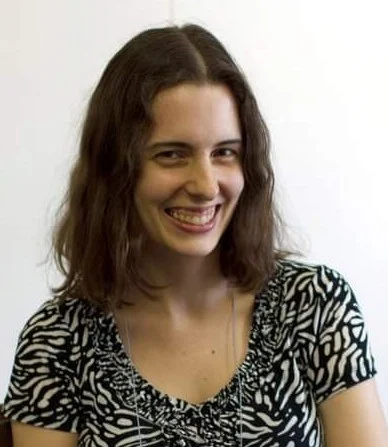
The American Psychological Association defines trauma simply as “an emotional response to a terrible event.” Broken down further, trauma can be acute (from a single horrific event that threatens one’s life or safety), chronic (ongoing or repeated trauma as from abuse or poverty), or complex (multiple, chronic, and prolonged exposures to trauma as experienced by people in war zones, those in abusive relationships, children who suffer from neglect and/or abuse). Melanie Craig

The emotional and physical effects of trauma can be severe and debilitating. I should know. I have been dealing with post-traumatic stress disorder (PTSD) since I was 13 and have long been searching for ways to alleviate the symptoms of PTSD and other trauma-related disorders. I was not making much headway until I came to United, and started researching spiritual and community healing options, and a vast array of trauma treatment resources I never knew existed before.

Therapy Options

The traditional therapy that I experienced focuses on cognitive behavioral therapy and biochemical interventions. In these scenarios, the patient is mostly passive, and interactions are one-to-one. During my time at United during the COVID pandemic, I learned about the value of community as a means of healing and support.

United places a strong emphasis on exploring and cultivating individual potential. This emphasis allowed me to construct my thesis by interweaving my Baha’i background and the mostly Christian resources on healing from trauma. I also integrated scientific PTSD research into my paper.

Interestingly, both the new scientific sources and religious sources reach the same conclusion: we heal better in community. Active listening and bonding in groups allows individuals to reestablish a sense of safety that is difficult for professionals to achieve one-on-one. These bonds also help to raise oxytocin levels (the snuggle hormone), which is typically low in those who suffer from PTSD. Even better, working in groups challenges us to expand our identity and our love for others.

The Spiritual Approach

Throughout my thesis research, I found that even though Christian and Baha’i theologians approach trauma through varied means, an examination of their distinct and similar insights yields promising methods for overcoming our culture of separation and building communities of resilience. Postmodern Christian theologians, for example, emphasize the potential for destruction post-trauma, the need for political reform, and the value of lived experience. Baha’i theologians, by contrast, emphasize the potential for spiritual growth post-trauma, the need for constructive resilience, and the value of spiritual transformation.

I propose that by integrating the discernments from both Christianity and the Baha’i faith, we can develop a more balanced and effective approach to trauma. It may be that individuals could fully process their emotions in community first, and then move forward together to find solutions. In that way, we would not become consumed by our trauma, nor ignore its wounds. Similarly, the practice of employing constructive resilience in tandem with political protests, when necessary, may provide the most efficacious path to humanizing our world.

As individuals, many Baha’i and Christian theologians have incredible wisdom about spiritual healing methods. The greatest knowledge, however, comes from weaving together the individuals’ wisdom.

I am so grateful for the support that United has given me so I could explore a variety of voices, from theologians to scientists, in my writing projects. I believe that, together, we can resist the darkness of trauma, but only if we listen to and learn from each other. As unique individuals, we all see the world in our own ways. Only by bringing our insights together can our understanding of trauma and healing grow.

Explore More Articles

United Celebrates Largest New Class and Highest Enrollment in Its 65-Year History

Enrollment Has More than Tripled in Ten Years For the second consecutive year, United Theological Seminary of the Twin Cities (United) is thrilled to welcome its largest-ever incoming class of degree-seeking students. With 85 new degree-seeking students, the seminary is celebrating a total fall term enrollment of 288 degree-seeking students and 7 certificate students, representing the largest total enrollment in United’s history. The seminary’s 65th academic year features: 25% year-over-year enrollment growth and a staggering 239% increase over fall 2016; 163 Master of Divinity (MDiv) students, an increase of 42% year-over-year; 63 Master of Arts (MA), Master of Arts in Leadership (MAL), and Master of Arts in Ministry (MAM) students; 62 Doctor of Ministry (DMin) students. Public theology, social transformation, interreligious engagement, and theology and the arts comprise the four foundational pillars of United’s curricula. They are unique among seminaries and divinity schools rooted in Christian traditions, cultivating an educational environment that practices ecumenism, religious pluralism, and social justice. The MDiv in Interreligious Chaplaincy is United’s largest degree program, with 73 students enrolled for the fall term. The concentration’s interfaith emphasis sets the school apart among its peers, drawing students from diverse backgrounds and faiths. Reflecting the program’s flagship status, the seminary marked a new milestone on July 1 when it welcomed Dr. Ginger Morgan as associate professor for Pastoral and Spiritual Care and program director for Interreligious Chaplaincy. United’s considerable ten-year growth can be credited to its leading-edge academic offerings, widely accessible distance education, and accomplished faculty. The seminary is a bold witness for the common good, preparing innovative leaders for myriad vocational and professional outcomes. From rural congregations to the city hospital’s ICU, United students and alums equip their communities for justice and peace. Mason Mennenga (’22), director of Admissions, leads a passionate and creative staff, all of whom are current students or alums. He reflects, “United’s growth in enrollment over the last number of years and our record for this year is truly a remarkable achievement in theological education. We’re showing what’s possible for progressive theological institutions!” Dr. Hillary Vamstad, director of Student Services, adds, “We’ve created an environment where students feel more than just a number, and I think students see that through the admissions and onboarding process. Feeling seen, heard, and supported while pursuing a seminary education is an important component to United’s growth.” Growth in student enrollment underscores the need to increase the number of core faculty members to continue to provide the quality of education for which United is well-known. Dr. Kyle Roberts, Vice President for Academic Affairs and Dean, shares, “We are undertaking two faculty searches this year, which include an additional faculty role focused on Ministry Practices. This is a specialty we have been needing for some time on our core faculty to ground students in the practical elements of ministry leadership, such as preaching and liturgy, religious education, institutional leadership and administration.” Rev. Dr. Molly T. Marshall, who is beginning her final year as United’s beloved president, asserts, “I believe United’s remarkable growth is due to our progressive and relevant curriculum, our theological hospitality, and our accessible educational delivery.” She continues, “We delight in creating space (perichoresis) for everyone who desires formative theological education, a distinctive pursuit among seminaries.” United looks ahead to a historic 65th year of progressive theological education, and we give thanks for the students whose vocations, traditions, and unique perspectives enrich the life of our seminary. About United Founded by the United Church of Christ (UCC) as a welcoming, ecumenical school that embraces all denominations and faith traditions, United Theological Seminary of the Twin Cities has been on the creative edge of progressive theological thought and leadership since it was established in 1962. Today, United continues to educate leaders who, through the eyes of faith, engage in the dismantling of systems of oppression, explore multi-faith spirituality, and push the boundaries of knowledge. Media Contact Nathanial Green (he/him) Director of Marketing and Communications press@unitedseminary.edu • 651.255.6138 Admissions and Enrollment admissions@unitedseminary.edu

United Launches National Search for Its Next President

The Position Profile and Application Are Now Available Today, the Presidential Search Committee, on behalf of United Theological Seminary of the Twin Cities, is opening the national search for the seminary’s next leader. This comes after the July announcement of Rev. Dr. Molly T. Marshall’s 2027 retirement following six transformative years of institutional growth and expansion. United’s next president will helm a dynamic school with a student body that has more than doubled in size in just ten years; a world-class faculty of artists, scholars, and theologians; and a diverse and interreligious student body preaching in pulpits, ministering in ICUs, leading nonprofits, and organizing for the common good. In a message shared with the United community, trustee and committee chair Rev. Dr. Kenneth V. Daniel (’81) describes the committee’s work in concert with executive search firm Isaacson, Miller (IM) to help “the seminary step into the next chapter of United’s mission and ministry.” Describing the ideal candidate, Dr. Daniel writes, “We are seeking an engaged leader who will join our mission to inspire creative scholarship, advance innovative pedagogy, develop leaders of distinction, and move the school forward to increased sustainability and global impact.” As of today, the public profile of the President’s role, as well as the application, is available to prospective applicants. Additionally, the public is invited to nominate individuals for consideration by the Committee. The application is linked on an official landing page that features Dr. Daniel’s note and a list of the committee members and their affiliations. The committee includes trustees as well as current and former faculty, student, staff, and alum representatives. Each faithfully brings their experiences to bear on their assignment. Dr. Daniel urges qualified leaders from myriad backgrounds to consider applying, writing, “Leaders from interfaith and ecumenical traditions, academic disciplines, relevant professional and denominational roles, and innovators in educational practices are invited to consider this unique opportunity.” Visit the link below to learn more, nominate a candidate, or submit your application. Apply or Nominate a Candidate About United Founded by the United Church of Christ (UCC) as a welcoming, ecumenical school that embraces all denominations and faith traditions, United Theological Seminary of the Twin Cities has been on the creative edge of progressive theological thought and leadership since it was established in 1962. Today, United continues to educate leaders who, through the eyes of faith, engage in the dismantling of systems of oppression, exploring multi-faith spirituality, and pushing the boundaries of knowledge. Search Committee Contact Grace Pennings Guenthner (’26) Administrative Assistant, Presidential Search Committee pssearch@unitedseminary.edu

United Welcomes Site Visit by The Association of Theological Schools’ Commission on Accrediting

United Theological Seminary of the Twin Cities is hosting a comprehensive evaluation visit for reaffirmation of accreditation by the Association of Theological Schools’ Commission on Accrediting on October 12–15, 2026. The purpose of this visit is to verify that the school meets all applicable Commission Standards of Accreditation. Comments regarding how well the school meets those standards and/or generally demonstrates educational quality may be sent to accrediting@ats.edu at least two weeks before the visit. Comments may also or instead be sent in writing to the Dean of the Seminary Kyle Roberts at kroberts@unitedseminary.edu. All comments will be shared with the onsite evaluation committee. For more about United's accreditation, click here. >