SAINT PAUL, MINNESOTA, UNITED STATES, November 10, 2023 — Founded in the 1960s, United Theological Seminary of the Twin Cities and Collegeville Institute for Ecumenical and Cultural Research have been knitted together throughout their histories. At a meeting in November, the two ecumenical faith organizations will celebrate their close and enduring connection.
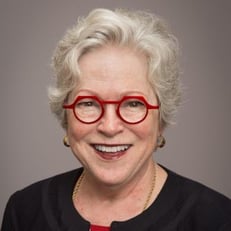 When United President Molly T. Marshall joined the Collegeville Institute board in 2023, she joined the august company of many United administrators, faculty, and alums who have also served on the board and in other capacities over the years. These connections, spanning decades of cumulative involvement, illustrate values rooted in accordant religious objectives.
President Marshall, who has more than one touchpoint with Collegeville, first became aware of the Institute in the late 1990s. In the fall of 2000, she was selected as a resident scholar, and planned to consult with the eminent pneumatology scholar, Father Kilian McDonnell, OSB, about her book—Joining the Dance: A Theology of the Spirit (2003)—and “enjoy the liturgical rhythms of the Benedictine community there.”
The History
This intertwining of United Theological Seminary of the Twin Cities (founded in 1962) and Collegeville Institute for Ecumenical and Cultural Research (chartered in 1967 as the Institute for Ecumenical and Cultural Research) has understandably deep roots. Both organizations were founded with ecumenical intent, and both prize research and scholarship.
Collegeville Institute, however, originated from the tranquil, bucolic settings of the community in which it was first imagined by a Benedictine monk from Saint John’s Abbey, Father Kilian McDonnell. Father McDonnell, now 102, was the Institute’s first president, a title he holds to this day.
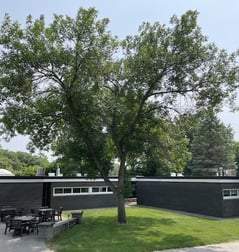 Collegeville Institute is irrevocably tied to its location. It anchors its ecumenical core in a setting that cannot help but evoke visceral rapture at the soothing call of nature. It was constructed with walls of windows on the shores of Stumpf Lake by the Hungarian modernist architect Marcel Breuer, who had designed Saint John’s Abbey a few years before. As the Institute’s written history attests, “The cry of loons was considered a fitting, even necessary, backdrop to the work to be done.”
.png?width=284&height=213&name=Web%20banner%20(476%20%C3%97%20357%20px).png) United, born out of the United Church of Christ (UCC) and grounded in the urgent needs of an ever-changing world, continues to confront forces that would reject Christ’s call for justice, peace, and belonging for all of creation. Our setting, inside an old industrial building at the heart of the urban Twin Cities, and scattered world wide through distance learning, relies on relationships, scholarship, art, expression, and hope.
United, born out of the United Church of Christ (UCC) and grounded in the urgent needs of an ever-changing world, continues to confront forces that would reject Christ’s call for justice, peace, and belonging for all of creation. Our setting, inside an old industrial building at the heart of the urban Twin Cities, and scattered world wide through distance learning, relies on relationships, scholarship, art, expression, and hope.
The Crossover
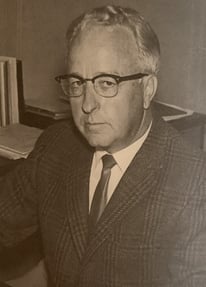 In a eulogy penned November 2, 1989, by H.C. Piper, Jr.—chair of Collegeville Institute’s board of directors and a United alum (’74) and supporter—the Institute mourned “the death on the Eve of All Saints of Louis Gunnemann, a charter member of the Institute’s Board of Directors.” Dr. Gunnemann, who served as dean at Mission House and at United, also supported the founding of Collegeville Institute. “Louis understood from the beginning,” Piper wrote, “how the Institute’s special genius depends on its being independent while at the same time drawing sustenance from the work and worship of the Benedictine community.”
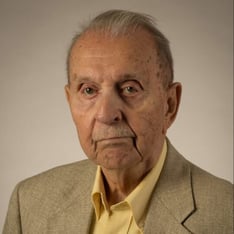 Rev. Dr. Clyde Steckel, who joined United’s faculty in 1970, knew about Collegeville Institute while in ministry at the University of Minnesota. In 1983, he became a resident scholar at the Institute while on sabbatical from United. In 1993, he joined the Institute’s board. Steckel suggests that it was easy to serve United and the Institute because there was no conflict of interest. “Both organizations,” Steckel explains, “had a similar mission and purpose: nontraditional, theological education.” Besides, he adds, “We all like to get out in the woods and by the lakes.”
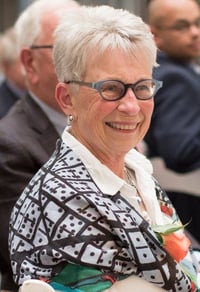 Dr. Mary Farrell Bednarowski, who covered Steckel’s sabbatical at United, was enticed to attend a luncheon for the Institute by acting United president Rev. Dr. Molly McMillan, one of the Institute’s founding board members. She’s been a supporter ever since. In 1990, Bednarowski was invited to be part of a three-year summer consultation. In 1996, when McMillan asked if she would join the board, Bednarowski remembers, “It took me about 30 seconds to say yes.” She adds, “I think of the Institute itself as a magical place, and that is also how I feel about United. The ‘magic,’ as I have experienced it in both places, is a gift freely offered to all who enter.”
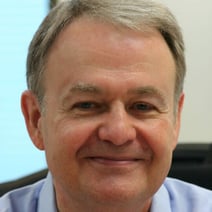 McMillan also invited Rev. Dr. Gary Reierson (a 1978 and 1986 United alum and current United trustee), to join the Institute’s board in 2000, when he was president and CEO of the Greater Minneapolis Council of Churches. He says he was inspired to join because the Institute “has an international reputation as a leading ecumenical think tank.” Reierson also notes that there is a similarity of mission between United and the Collegeville Institute, where he now serves—as do Steckel and Bednarowski—as an honorary life member of the board.
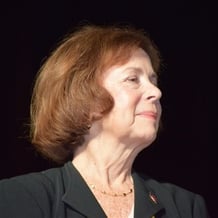 Rev. Kathi Austin Mahle (also a 1978 alum) has served on United’s board and on the Collegeville Institute board. “United,” she explains, “has this focus on ecumenical education, which then also reflects the ecumenical nature of Collegeville Institute. We’re all working toward a changed world and greater understanding that comes through education and providing scholars with the opportunity to explore their work in an ecumenical environment.”
Looking to the Future
As President Marshall reflects, “I chose to join the board of Collegeville Institute because of my appreciation for the time I spent there researching and writing. At the midpoint of my academic career, the time as a resident scholar opened new vistas of learning, especially in a community of scholars where we assessed one another’s work. It was a transformative sabbatical for me.”
While neither United nor Collegeville Institute could have foreseen the seismic changes in the world over the past six decades, both have nonetheless weathered the storms of change. Both have evolved and adapted, and remain true to their founding ideals.
Media Contact
Nathanial Green, Director of Marketing & Communications
ngreen@unitedseminary.edu
About United Theological Seminary of the Twin Cities
Founded as a welcoming, ecumenical school that embraces all denominations and faith traditions, United Theological Seminary of the Twin Cities has been on the cutting edge of progressive theological thought leadership since it was established in 1962. Today, United continues to train leaders who dismantle systems of oppression, explore multi-faith spirituality, and push the boundaries of knowledge.